Life Science
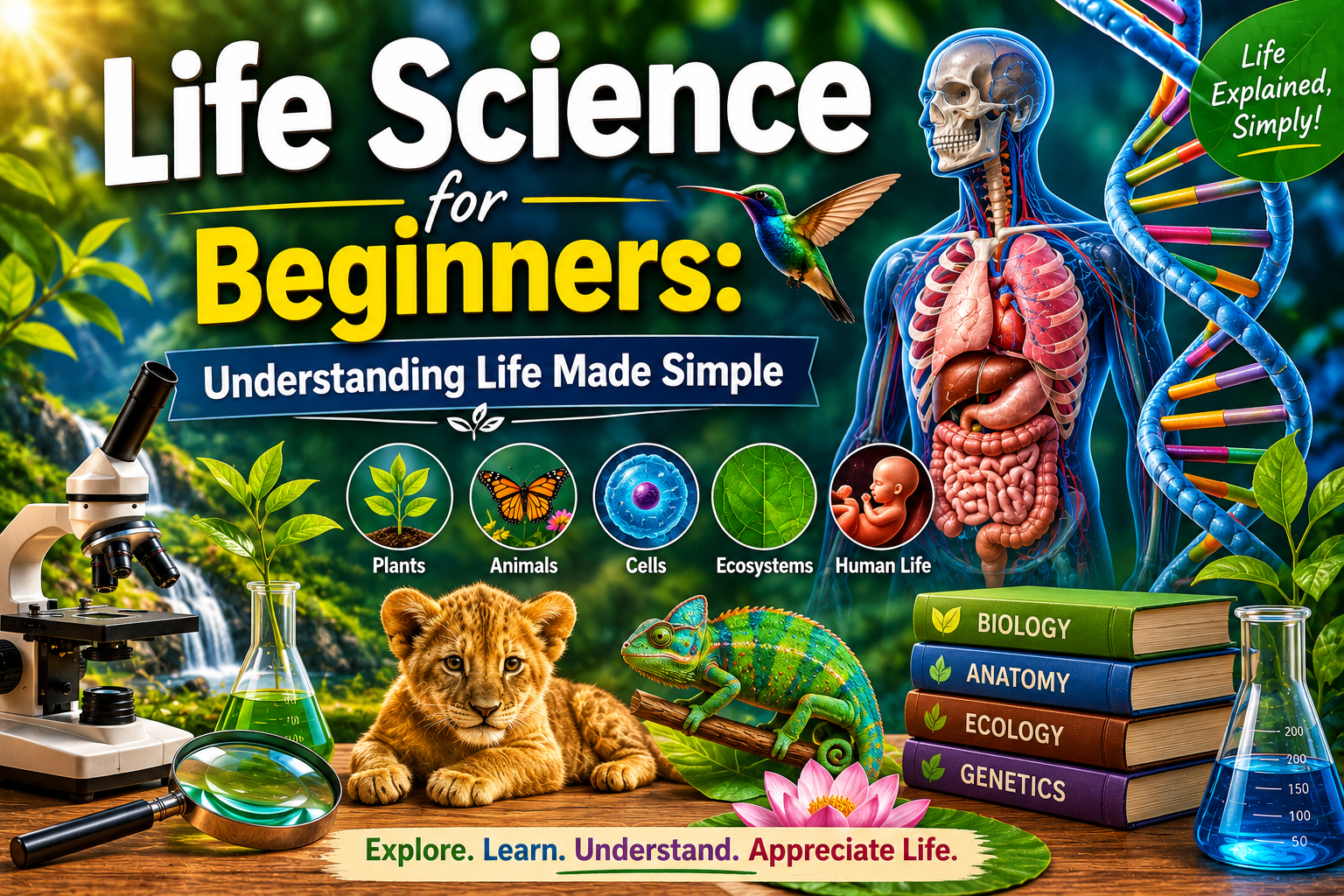
Explore the Science of Living Organisms and the Processes That Sustain Life — Life science is a major area of natural science concerned with understanding living organisms and the biological processes that allow life to exist and continue. It includes disciplines such as biology, genetics, ecology, physiology, microbiology, and molecular biology, covering subjects that range from the structure and function of individual cells to interactions among organisms and their surrounding environments.
Through observation, experimentation, and scientific analysis, life science investigates how organisms develop, function, reproduce, adapt, and change over generations. It also examines the relationships between living systems and the ecosystems in which they exist. At its core, life science seeks to understand the characteristics, mechanisms, and processes that distinguish living systems from non-living matter.
Content Overview
- Introduction: What Is Life Science?
- Part 1: The Scope of Life Science – Defining and Studying Life
- Part 2: Biology – The Core of Life Sciences
- Part 3: Health Sciences – Human Body, Medicine, and Disease
- Part 4: Botany – The Science of Plants
- Part 5: Zoology – The Science of Animals
- Part 6: Microbiology – The Hidden World of Microorganisms
- Part 7: Genetics – The Science of Heredity
- Part 8: Ecology – The Science of Ecosystems
- Part 9: Integration and Interdisciplinary Connections
- Part 10: Case Studies in Life Science
- Conclusion: The Endless Frontier of Life Science
Introduction: What Is Life Science?
Life science is the branch of natural science that focuses on living organisms – their structure, function, growth, reproduction, behavior, evolution, and interactions with each other and their environment. Unlike physical sciences (which study non-living matter and energy), life sciences deal with the complex, dynamic, and often self-organizing systems we call life.
From the smallest bacterium to the largest whale, from a single cell to the entire biosphere, life science seeks to understand what life is, how it works, and how it has diversified over billions of years. This guide provides a comprehensive, deep exploration of the major fields within life science: biology, health sciences (anatomy and physiology), botany, zoology, microbiology, genetics, and ecology. Each section progresses from fundamental definitions to advanced ideas, supported by clear examples and case studies.
Example: Studying the human body, plants in a forest, animals in wildlife, and bacteria in soil all belong to life science. Each reveals a different facet of the living world.
Part 1: The Scope of Life Science – Defining and Studying Life
1.1 Life Science as the Study of Living Organisms
Definition: Life science is the scientific study of living organisms – their origins, structure, function, growth, reproduction, behavior, and interactions. It encompasses all disciplines that investigate the characteristics and processes that distinguish living from non-living matter.
Scope: Life science covers an enormous range of scales:
- Molecular level: DNA, proteins, enzymes, metabolic pathways.
- Cellular level: Cell structure, division, signaling.
- Organismal level: Anatomy, physiology, behavior of individual plants, animals, and microbes.
- Population and ecosystem level: How groups of organisms interact with each other and their environment.
1.2 Characteristics of Life – What Makes Something Alive?
Biologists generally agree that living things share several key characteristics. A non-living object (like a rock) may exhibit one or two, but not all.
- Organization: Living things are highly organized, from cells to tissues to organs to systems.
- Metabolism: They take in energy and materials and use them to grow and maintain themselves.
- Homeostasis: They maintain a stable internal environment despite external changes (e.g., body temperature, pH).
- Growth and development: Living organisms grow in size and undergo changes in form over time.
- Reproduction: Living organisms create offspring, either through sexual or asexual processes.
- Response to stimuli: They react to changes in their environment (light, temperature, touch, chemicals).
- Evolutionary adaptation: Populations change over generations to become better suited to their environment.
Example: A sunflower seed germinates, grows toward light (response), produces leaves and flowers (growth), and releases seeds to make new sunflowers (reproduction). A rock does none of these.
1.3 The Hierarchy of Life – From Molecules to Biosphere
Life is organized in nested levels, each building on the previous:
| Level | Description | Example |
|---|---|---|
| Molecules | Chemical building blocks | DNA, proteins, water |
| Organelles | Functional units within cells | Mitochondria, nucleus |
| Cells | Basic unit of life | Muscle cell, bacterium |
| Tissues | Groups of similar cells | Muscle tissue, leaf tissue |
| Organs | Structures made of multiple tissues | Heart, leaf, liver |
| Organ systems | Groups of organs working together | Circulatory system |
| Organism | Individual living being | Human, oak tree, frog |
| Population | Same species in an area | All white-tailed deer in a forest |
| Community | All populations in an area | Forest: deer, trees, birds, fungi |
| Ecosystem | Community + physical environment | Forest plus soil, water, air |
| Biosphere | All ecosystems on Earth | The entire planet |
1.4 The Scientific Method in Life Science
Life science uses the same empirical method as all sciences: observation, hypothesis formation, experimentation, and conclusion. However, living systems present unique challenges: they are variable, complex, and often cannot be studied in isolation. Biologists use controlled experiments, comparative studies, and long-term observations.
Example: To test whether a new drug lowers blood pressure, researchers give the drug to one group and a placebo to another, ensuring both groups are similar in age, weight, and health. They measure blood pressure before and after. Statistical analysis determines if any difference is likely due to the drug or to chance.
Part 2: Biology – The Core of Life Sciences
2.1 Etymology – The Study of Life
Definition: Biology is the branch of natural science that focuses on life and living organisms. The term comes from the Greek words bios (life) and logos (study or discourse). It investigates the structure, function, growth, origin, evolution, and distribution of all living things.
Explanation: Biology is not a single discipline but a vast umbrella covering everything from molecular interactions to global ecosystems. It asks fundamental questions: What is life? How did life arise? How do organisms maintain themselves? Why do species change over time?
Example: Biology studies how plants produce food through photosynthesis, how animals move and hunt, how humans breathe and circulate blood, and how bacteria cause disease or aid digestion.
2.2 Major Subfields of Biology
Biology is traditionally divided into many specialized fields. The most important are covered in later sections, but here is an overview:
- Molecular biology: The study of biological molecules (DNA, RNA, proteins) and their interactions.
- Cell biology: The study of cells – their structure, function, and division.
- Genetics: The study of heredity and variation (see Part 7).
- Evolutionary biology: The study of how species change over time and diversify.
- Physiology: The study of how organisms function (see Health Sciences).
- Anatomy: The study of internal and external structures (see Health Sciences).
- Botany: The study of plants (see Part 4).
- Zoology: The study of animals (see Part 5).
- Microbiology: The study of microscopic organisms (see Part 6).
- Ecology: The study of interactions between organisms and their environment (see Part 8).
2.3 Cell Theory – The Foundation of Biology
The cell theory is one of the core unifying principles of biology. It states:
- All living organisms are made up of one or more cells.
- The cell is the fundamental unit of structure and organization in living organisms.
- All cells arise from pre-existing cells (no spontaneous generation).
Explanation: The cell theory, developed in the 19th century (Schleiden, Schwann, Virchow), transformed biology. It means that studying cells is studying life itself. Cells come in two main types: prokaryotic (no nucleus, bacteria and archaea) and eukaryotic (nucleus, all other life).
Example: A human body contains about 37 trillion cells. Each cell is alive – it metabolizes, responds to signals, and divides. When cells die, new cells replace them.
2.4 Evolution – The Unifying Principle of Biology
The theory of evolution by natural selection (Charles Darwin, Alfred Russel Wallace, 1859) explains how species change over time and how all life shares a common ancestor. Key points:
- Variation: Members of a population exhibit differences in their traits.
- Inheritance is the process by which traits are transferred from parents to their offspring.
- Differential survival and reproduction mean that individuals with traits better adapted to their environment have a greater chance of surviving and reproducing.
- Adaptation: Over time, populations develop traits that make them better suited to their environment.
Example: The evolution of antibiotic resistance in bacteria is a direct observation of natural selection. When antibiotics are used, susceptible bacteria die, but resistant mutants survive and reproduce, leading to a population of resistant bacteria.
Why evolution matters: Evolution explains the unity (all life shares DNA, same genetic code) and diversity (millions of species) of life. It is the framework for all modern biology.
Part 3: Health Sciences – Human Body, Medicine, and Disease
3.1 Definition and Scope – From Anatomy to Public Health
Definition: Health sciences are the applied branches of biology that focus on human health, disease prevention, diagnosis, treatment, and healthcare delivery. They integrate knowledge from anatomy, physiology, pathology, pharmacology, epidemiology, and clinical practice.
Explanation: Health sciences aim to understand how the human body works in health and what goes wrong in disease. They provide the scientific foundation for medicine, nursing, dentistry, pharmacy, and public health.
Example: Health science studies how the heart pumps blood, how medicines treat diseases (e.g., antibiotics kill bacteria), and how vaccines prevent infections by training the immune system.
3.2 Anatomy – The Structure of the Body
Definition: Anatomy (from Greek ana – up, tome – cutting) is the branch of science that studies the structure and physical organization of the body – the shape, location, and arrangement of organs, tissues, and bones.
In simple terms: Anatomy = What the body looks like inside.
3.2.1 Gross Anatomy vs. Microscopic Anatomy
- Gross (macroscopic) anatomy: Structures visible to the naked eye – organs, muscles, bones, blood vessels. Studied through dissection and medical imaging (X-ray, CT, MRI).
- Microscopic anatomy (histology): Structures visible only under a microscope – tissues, cells, and cellular components.
3.2.2 Major Organ Systems (Overview)
The human body is structured into 11 major organ systems. Anatomists study each:
- The skeletal system consists of bones, cartilage, and ligaments that provide support, protection, and movement.
- Muscular system: Skeletal, smooth, cardiac muscles – movement, posture, heat production.
- The nervous system includes the brain, spinal cord, and nerves, which coordinate control and communication throughout the body.
- Endocrine system: Glands (thyroid, adrenal, pancreas) – hormones, long-term regulation.
- Cardiovascular system: Heart, blood vessels, blood – transport of oxygen, nutrients, wastes.
- Respiratory system: Lungs, trachea, diaphragm – gas exchange (O₂ in, CO₂ out).
- Digestive system: Stomach, intestines, liver – breakdown and absorption of food.
- Urinary system: Kidneys, bladder – removal of wastes, water balance.
- Reproductive system: Includes organs such as the ovaries and testes, which are involved in the production of offspring.
- Integumentary system: Comprising the skin, hair, and nails, it provides protection and helps regulate body temperature.
- Lymphatic and Immune System: This system includes structures such as lymph nodes and the spleen, which play a key role in defending the body against infections.
Example (anatomy): The human heart has four chambers: right atrium, right ventricle, left atrium, left ventricle. It has four valves (tricuspid, pulmonary, mitral, aortic) and is enclosed in a sac called the pericardium. Studying these structures is anatomy.
3.2.3 Physiology – The Function of the Body
Definition: Physiology (from Greek physis – nature, logos – study) is the study of how body parts and organs function – the chemical and physical processes that keep us alive.
In simple terms, physiology refers to how the body functions.
While anatomy studies structure, physiology studies function. The two are inseparable: structure enables function, and function shapes structure.
Key concept – Homeostasis: The maintenance of a stable internal environment despite external changes. Examples: body temperature around 37°C, blood pH around 7.4, blood glucose around 90 mg/dL. Homeostasis is achieved through feedback loops (e.g., sweating cools you; shivering warms you).
Examples of physiological processes:
- Heart physiology: The heart pumps blood because cardiac muscle contracts rhythmically (electrical impulses from the sinoatrial node). Each contraction pushes blood into arteries.
- Respiratory physiology: The diaphragm contracts, expanding the chest cavity, lowering pressure, and drawing air into the lungs. Oxygen moves into the blood through diffusion, while carbon dioxide diffuses out.
- Muscle physiology: When you run, your leg muscles use ATP (energy) to contract and relax. Your heart rate increases to supply more oxygen, and your breathing deepens to expel CO₂.
Example: When you run, your heart beats faster, your lungs take in more oxygen, your muscles use energy (ATP), and your body sweats to cool down. This integrated process is studied in physiology.
3.4 The Integration of Anatomy and Physiology
Anatomy and physiology are taught together because they are two sides of the same coin. You cannot understand how the heart pumps (physiology) without knowing its four chambers and valves (anatomy). You cannot understand how the lungs exchange gases (physiology) without knowing the structure of alveoli (anatomy).
| Field | Focus | Example Question |
|---|---|---|
| Anatomy | Body structure | What is the shape of the heart? Where are the lungs located? |
| Physiology | Body function | How does the heart pump blood? How do lungs exchange oxygen? |
Example: Anatomy studies the lung’s structure – the branching bronchi, bronchioles, and tiny air sacs called alveoli. Physiology studies how oxygen moves from the alveoli into the blood and carbon dioxide moves the opposite way – a process called diffusion.
3.5 Other Health Science Disciplines
- Pathology: The study of disease – what goes wrong at the cellular and tissue level. For example, cancer pathology examines how tumor cells differ from normal cells.
- Pharmacology: The study of drugs – how they interact with the body (pharmacodynamics) and how the body processes them (pharmacokinetics).
- Epidemiology: The study of disease patterns in populations – who gets sick, when, where, and why. Used to track outbreaks and design public health interventions.
- Clinical medicine: The application of health sciences to diagnose and treat individual patients.
Example: A patient with chest pain undergoes an ECG (physiology), a chest X-ray (anatomy), and blood tests (pathology). A cardiologist (clinical medicine) integrates the findings to diagnose a heart attack and prescribe clot-busting drugs (pharmacology).
Part 4: Botany – The Science of Plants
4.1 Definition and Importance of Botany
Definition: Botany (from Greek botane – plant) is the branch of biology that focuses on the scientific study of plants – including their structure, growth, reproduction, metabolism, evolution, ecology, and economic importance.
Importance of plants:
- Oxygen production: Photosynthesis releases oxygen into the atmosphere.
- Food source: All animals depend directly or indirectly on plants (grains, fruits, vegetables, or animals that eat plants).
- Medicine: Many drugs (aspirin from willow bark, morphine from poppies, taxol from yew trees) come from plants.
- Ecosystem services: Plants prevent soil erosion, regulate water cycles, provide habitat, and sequester carbon.
- Materials: Wood, paper, cotton, rubber, and biofuels.
Example: Plants make food using photosynthesis: sunlight + water + carbon dioxide → glucose + oxygen. Studying this process is botany.
4.2 Plant Structure – Roots, Stems, Leaves, Flowers
Roots: Anchor the plant, absorb water and minerals from soil, store carbohydrates. Types: taproot (carrots) and fibrous roots (grasses).
Stems: Support leaves and flowers, transport water and nutrients between roots and leaves (via xylem and phloem), and sometimes store food (potatoes are modified stems).
Leaves: Main sites of photosynthesis. They have a large surface area to capture sunlight, stomata for gas exchange, and veins (vascular bundles) for transport.
Flowers: Reproductive structures of angiosperms (flowering plants). They contain male parts (stamens – anthers produce pollen) and female parts (carpels – ovary contains ovules).Pollination results in fertilization, followed by the formation of seeds and fruits.
4.3 Photosynthesis – How Plants Make Food
Photosynthesis is the process through which plants, algae, and certain bacteria transform light energy into chemical energy stored as glucose.
Equation: 6 CO₂ + 6 H₂O + light energy → C₆H₁₂O₆ + 6 O₂
Two stages:
- Light-dependent reactions (thylakoid membranes of chloroplasts): Light energy splits water, producing oxygen, ATP (energy carrier), and NADPH (electron carrier).
- Calvin cycle (stroma of chloroplasts): Uses ATP and NADPH to fix carbon dioxide into glucose.
For example, a maple leaf exposed to sunlight takes in carbon dioxide from the air and absorbs water through its roots. Using chlorophyll (green pigment), it converts these into sugar (which feeds the tree) and releases oxygen.
4.4 Plant Reproduction – Asexual and Sexual
Asexual reproduction (vegetative propagation): New plants grow from stems, roots, or leaves without seeds. Examples: strawberry runners, potato tubers, spider plant plantlets. Advantages: rapid, identical to parent. Disadvantage: no genetic variation.
Sexual reproduction: Involves flowers, pollination, fertilization, and seed formation.
- Pollination: Transfer of pollen from anther to stigma (by wind, insects, birds, bats).
- Fertilization: Pollen tube grows down the style; sperm fertilizes the ovule, forming a zygote.
- Seed and fruit: The ovule becomes a seed (containing the embryo), and the ovary becomes a fruit (protecting and dispersing seeds).
4.5 Plant Ecology and Economic Importance
Plant ecology: Studies how plants interact with their environment and other organisms. Examples: competition for light in rainforests, adaptations to drought (cacti), symbiosis with mycorrhizal fungi (roots and fungi exchange nutrients).
Economic botany: The study of useful plants – crops (wheat, rice, corn), medicinal plants, timber, fibers (cotton, flax), and ornamental plants.
Example: Rice feeds half the world’s population. Botanists have developed high-yield, disease-resistant rice varieties (Green Revolution) through selective breeding and genetic modification.
Part 5: Zoology – The Science of Animals
5.1 Definition and Scope of Zoology
Definition: Zoology (from Greek zoon – animal, logos – study) is the branch of biology dedicated to the scientific study of animals – their structure, physiology, behavior, evolution, classification, and distribution.
Scope: Zoology covers all animals, from microscopic rotifers to giant blue whales, from simple sponges to complex primates. It includes subdisciplines such as:
- Entomology: Study of insects.
- Ichthyology: Study of fish.
- Herpetology: Study of reptiles and amphibians.
- Ornithology: Study of birds.
- Mammalogy: Study of mammals.
- Ethology: Study of animal behavior.
5.2 Classification of Animals – Vertebrates and Invertebrates
Animals are divided into two major groups based on the presence of a backbone (vertebral column).
Vertebrates (subphylum Vertebrata): Animals with a backbone. They have a skull, internal skeleton, and complex nervous system. Classes:
- Mammals: Hair, mammary glands, warm-blooded (humans, dogs, whales, bats).
- Birds: Feathers, beaks, wings, warm-blooded (eagles, penguins, sparrows).
- Reptiles: Scales, cold-blooded, lay eggs on land (snakes, lizards, turtles, crocodiles).
- Amphibians: Characterized by moist skin and a life cycle involving metamorphosis (from tadpole to adult), they typically live both in water and on land, such as frogs and salamanders.
- Fish: Gills, fins, live in water (sharks, salmon, goldfish).
Invertebrates (all other animals): No backbone. They make up over 95% of animal species. Major groups:
- Arthropods: Jointed legs and exoskeleton (insects, spiders, crabs, centipedes).
- Mollusks: Soft body, often a shell (snails, clams, octopuses, squids).
- Annelids: Segmented worms (earthworms, leeches).
- Cnidarians: Jellyfish, corals, sea anemones (stinging cells).
- Porifera: Sponges – simplest animals, no tissues or organs.
- Echinoderms: Starfish, sea urchins (spiny skin, radial symmetry).
Example: Humans are vertebrates (mammals). Butterflies are invertebrates (arthropods). Studying the behavior, anatomy, and classification of both is zoology.
5.3 Animal Behavior – Instinct, Learning, and Social Structures
Ethology (study of animal behavior) examines both innate (instinctive) and learned behaviors.
- Innate behaviors: Born with them; no learning required. Examples: a spider spinning a web, a baby mammal suckling.
- Learned behaviors: Modified by experience. Examples: a dog learning to sit on command, a bird learning a song from its parents.
- Social behaviors: Interactions within groups – dominance hierarchies, cooperation, altruism, mating systems. Examples: wolf packs, ant colonies, chimpanzee grooming.
Example: Honeybees perform a “waggle dance” to communicate the location of flowers to hive mates. This is an innate, complex behavior studied in zoology.
5.4 Comparative Anatomy and Physiology
Zoologists compare the anatomy and physiology of different animal groups to understand evolution and adaptation.
- Homologous structures: Same underlying anatomy, different functions (e.g., human arm, whale flipper, bat wing – all from a common mammalian ancestor).
- Analogous structures: Different underlying anatomy, same function (e.g., bird wing and insect wing – evolved independently for flight).
- Vestigial structures: Remnants of organs that had a function in ancestors but are reduced or non-functional (e.g., human appendix, whale pelvic bones).
Example: The circulatory system of a fish (two-chambered heart, single circuit) is simpler than that of a mammal (four-chambered heart, double circuit). Comparative physiology shows how these differences relate to oxygen demands and habitat.
Part 6: Microbiology – The Hidden World of Microorganisms
6.1 Definition and Scope – The Invisible Majority
Definition: Microbiology is the study of microorganisms – living organisms that are too small to be seen with the naked eye (typically less than 0.1 mm). These groups include organisms such as bacteria, viruses, fungi, protozoa, and algae.
Importance: Microbes are everywhere – in soil, water, air, and inside our bodies. They are essential for nutrient cycling, digestion, food production (yogurt, bread, beer), and biotechnology. Some cause disease, but the vast majority are harmless or beneficial.
Example: Bacteria in your gut help digest food and synthesize vitamins (e.g., vitamin K). Studying these bacteria is microbiology.
6.2 Major Groups of Microorganisms
6.2.1 Bacteria – Prokaryotic Powerhouses
- Prokaryotic: No nucleus or membrane-bound organelles. Single-celled.
- Shapes: Cocci (spheres), bacilli (rods), spirilla (spirals).
- Reproduction: Binary fission (splitting into two).
- Roles: Decomposers, nitrogen-fixers (convert atmospheric N₂ to ammonia for plants), pathogens (tuberculosis, strep throat), beneficial (yogurt, cheese, probiotics).
6.2.2 Viruses – The Borderline of Life
- Not cells: Viruses consist of genetic material (DNA or RNA) inside a protein coat.They are unable to reproduce independently and must invade a host cell to use its machinery for replication.
- Debate: Are viruses alive? They evolve but do not metabolize or maintain homeostasis.
- Examples: Influenza (flu), HIV, COVID-19 (SARS-CoV-2), common cold (rhinovirus).
6.2.3 Fungi – Molds, Yeasts, and Mushrooms
- Eukaryotic: Have a nucleus. Some are microscopic (yeasts, molds), some macroscopic (mushrooms).
- Role: Decomposers (break down dead matter), pathogens (athlete’s foot, ringworm), beneficial (penicillin from Penicillium mold, bread yeast).
6.2.4 Protozoa – Single-Celled Eukaryotes
- Animal-like protists: Motile, feed on bacteria or other small organisms.
- Examples: Amoeba (moves by pseudopods), Paramecium (moves by cilia). Some cause disease: Plasmodium (malaria), Giardia (diarrhea).
6.2.5 Algae – Photosynthetic Microbes
- Plant-like protists: Contain chlorophyll, perform photosynthesis, produce oxygen.
- Examples: Diatoms (silica shells, major oxygen producers), green algae (ancestors of land plants), seaweed (macroscopic but some are microscopic).
6.3 Beneficial vs. Harmful Microbes
| Type | Beneficial | Harmful (Pathogenic) |
|---|---|---|
| Bacteria | Gut flora, nitrogen fixation, fermentation (yogurt, sauerkraut) | Tuberculosis, cholera, strep throat |
| Viruses | Some used in gene therapy; bacteriophages kill bacteria | COVID-19, HIV, influenza, Ebola |
| Fungi | Penicillin, yeast for bread/beer, decomposers | Athlete’s foot, candidiasis, ringworm |
| Protozoa | Some are part of plankton (food web) | Malaria, sleeping sickness, giardiasis |
Example: Lactobacillus bacteria turn milk into yogurt (beneficial). The same species can cause tooth decay if sugar is present (harmful). Context matters.
6.4 Applications of Microbiology
- Medicine: Antibiotics (from bacteria and fungi), vaccines, antiviral drugs, diagnostic tests (PCR for COVID-19).
- Industry: Fermentation (beer, wine, bread, cheese), biofuel production (algae, yeast), enzyme production (laundry detergents).
- Agriculture: Nitrogen-fixing bacteria (rhizobia) in legume roots; biopesticides (Bacillus thuringiensis).
- Environmental: Bioremediation – using microbes to clean up oil spills, heavy metals, and sewage.
- Research: Model organisms (E. coli) for studying genetics and molecular biology.
For example, Alexander Fleming discovered penicillin in 1928 when he observed that a mold called Penicillium destroyed bacteria.. This launched the antibiotic era, saving millions of lives.
Part 7: Genetics – The Science of Heredity
7.1 Definition – How Traits Are Passed
Definition: Genetics is the branch of biology that studies heredity – how traits are passed from parents to offspring – and variation – how traits differ among individuals.
Traits include: Eye color, hair color, height, blood type, susceptibility to certain diseases, and thousands of other characteristics.
Example: If both parents have curly hair, their child may also have curly hair. The child inherits genes for hair texture from both parents. This inheritance is studied in genetics.
7.2 Genes, DNA, and Chromosomes
- DNA (deoxyribonucleic acid) is the molecule that stores genetic information.. It looks like a twisted ladder (double helix).
- Genes: Sections of DNA that carry instructions for producing specific proteins. Each gene determines a trait or contributes to it.
- Chromosomes: Long strands of DNA wrapped around proteins. Humans have 23 pairs (46 total). One set from mother, one from father.
- A genome is the complete collection of genetic material found within an organism.
Example: The gene for melanin production (pigment) determines skin and eye color. Variations (alleles) of this gene produce brown, blue, or green eyes.
7.3 Mendelian Genetics – Simple Inheritance Patterns
Gregor Mendel (1822–1884), an Austrian monk, discovered the basic laws of inheritance by breeding pea plants.
Key concepts:
- Alleles: Alternative forms of a gene, such as those responsible for purple or white flower color.
- Dominant vs. recessive: A dominant allele (e.g., purple) masks the effect of a recessive allele (e.g., white).Recessive traits are expressed only when an individual inherits two recessive alleles.
- Genotype: The genetic makeup (e.g., Pp – one dominant, one recessive).
- Phenotype: The observable trait (e.g., purple flowers).
Punnett square: A tool to predict the probability of offspring inheriting certain alleles.
Example: In humans, the allele for brown eyes (B) is dominant over blue eyes (b). If both parents are Bb (brown-eyed carriers), their child has a 25% chance of bb (blue eyes), 50% chance of Bb (brown carrier), and 25% chance of BB (brown non-carrier).
7.4 Modern Genetics – DNA Replication, Mutation, and Gene Expression
Before a cell divides, it replicates its DNA to ensure each new cell receives a complete copy. The double helix separates, and each strand acts as a template for forming a new complementary strand. This ensures each daughter cell gets an identical copy.
Mutation: A change in the DNA sequence. Mutations can be harmless, harmful (cause disease), or beneficial (provide evolutionary advantage). Example: A mutation in the gene for hemoglobin causes sickle cell anemia (harmful), but carriers are resistant to malaria (beneficial in malaria-endemic regions).
Gene expression: The process by which a gene’s DNA sequence is used to produce a protein (via transcription to RNA and translation to amino acids). Not all genes are active in all cells; cells specialize by expressing only certain genes.
Example: Muscle cells express genes for actin and myosin (contractile proteins), while nerve cells express genes for neurotransmitters and ion channels.
7.5 Genetic Engineering and CRISPR
Genetic engineering: Direct manipulation of an organism’s genes using biotechnology. Examples: inserting human insulin gene into bacteria to produce insulin for diabetics; creating genetically modified (GM) crops resistant to pests or herbicides.
CRISPR-Cas9 (Clustered Regularly Interspaced Short Palindromic Repeats): A revolutionary gene-editing tool adapted from bacterial immune systems. It allows scientists to cut DNA at precise locations, delete, insert, or replace genes. Applications: treating genetic diseases (sickle cell, cystic fibrosis), creating disease-resistant crops, and basic research.
Ethical considerations: Should we edit human embryos? What are the ethical implications of creating “designer babies” for non-medical traits?These questions are actively debated.
Example: In 2023, the UK approved a CRISPR-based therapy for sickle cell disease – a patient’s own stem cells are edited to correct the mutation and then reinfused.
Part 8: Ecology – The Science of Ecosystems
8.1 Definition – Organisms and Their Environment
Definition: Ecology (from Greek oikos – house or dwelling, logos – study) is the branch of biology that studies the interactions among organisms and between organisms and their physical environment.
Explanation: Ecology is not the same as environmentalism (which is a value-based movement). Ecology is a scientific discipline that describes and explains patterns in nature – who lives where, how many, and why.
Example: A forest ecosystem: plants produce food (photosynthesis), deer eat plants, lions eat deer, and bacteria decompose dead organisms. This cycle maintains balance. Studying these relationships is ecology.
8.2 Levels of Ecological Organization
| Level | Description | Example |
|---|---|---|
| Organism | Individual living thing | One deer |
| Population | Same species in an area | All deer in a forest |
| Community | All populations in an area | Deer, trees, birds, insects, fungi |
| Ecosystem | Community + physical environment | Forest plus soil, water, sunlight |
| Biome | Large region with similar climate and ecosystems | Tropical rainforest, desert, tundra |
| Biosphere | All ecosystems on Earth | The entire planet |
8.3 Energy Flow and Nutrient Cycles
Energy flow: Energy enters ecosystems as sunlight, captured by plants (producers/autotrophs) via photosynthesis. Herbivores (primary consumers) eat plants; carnivores (secondary/tertiary consumers) eat herbivores; decomposers break down dead matter, releasing nutrients. Energy is lost as heat at each level (10% rule – only about 10% of energy passes to the next trophic level).
Nutrient cycles: Unlike energy, matter (carbon, nitrogen, phosphorus, water) is recycled within ecosystems.
- Carbon cycle: Photosynthesis removes CO₂ from air; respiration, decomposition, and combustion return CO₂.
- Nitrogen cycle: Bacteria convert atmospheric N₂ into ammonia (nitrogen fixation), then into nitrates (nitrification), which plants use. Other bacteria convert nitrates back to N₂ (denitrification).
Example: A lion eats a zebra. The energy from the grass the zebra ate is now in the lion, but only about 10% of the grass’s energy reaches the lion. The rest was used for the zebra’s metabolism or lost as heat.
8.4 Population Ecology and Community Interactions
Population ecology: Studies how populations grow, shrink, and are regulated. Factors: birth rate, death rate, immigration, emigration, carrying capacity (maximum population an environment can support). Example: A rabbit population may grow rapidly but crash when food runs out or predators increase.
Community interactions:
- Competition: Two species compete for the same resource (food, space). May lead to competitive exclusion (one species eliminated) or niche partitioning (they evolve to use different resources).
- Predation: One organism (predator) eats another (prey). Predators adapt (speed, claws), prey adapt (camouflage, toxins).
- Symbiosis: Close, long-term interactions.
- Mutualism: Both benefit (bees and flowers; clownfish and anemones).
- Commensalism: One benefits, the other unaffected (barnacles on whales).
- Parasitism: One benefits, the other harmed (ticks on mammals; tapeworms).
8.5 Conservation Ecology and Climate Change
Conservation ecology: Applies ecological principles to protect biodiversity, restore degraded ecosystems, and manage natural resources sustainably. It addresses habitat destruction, invasive species, overexploitation, pollution, and climate change.
Climate change: Human activities (burning fossil fuels, deforestation) increase greenhouse gases (CO₂, methane), trapping heat and altering global climates. Effects: rising sea levels, more frequent extreme weather, shifts in species ranges, coral bleaching, and extinction risks.
Example: Coral reefs are dying due to ocean warming (bleaching). Conservation ecologists work to establish marine protected areas, reduce pollution, and breed heat-resistant corals.
Part 9: Integration and Interdisciplinary Connections
9.1 Life Sciences and Physical Sciences
Life depends on physics and chemistry. Understanding biological processes requires knowledge of:
- Chemistry: Metabolism is a series of chemical reactions. DNA is a chemical molecule. Enzymes are protein catalysts.
- Physics: Blood flow follows fluid dynamics. Nerve impulses are electrical. Muscles use mechanical forces.
Example: Medical imaging (MRI, CT, PET) uses physics (magnetism, X-rays, positron emission) to visualize anatomy and physiology – a direct integration.
9.2 Life Sciences and Medicine
Every medical advance is built on life science research. Examples:
- Vaccines: Based on immunology and microbiology.
- Antibiotics: Discovered through microbiology.
- Gene therapy: Based on genetics and molecular biology.
- Organ transplantation: Requires knowledge of anatomy, physiology, and immunology.
9.3 Life Sciences and Technology (Biotechnology)
Biotechnology applies life science to develop products and processes:
- Recombinant DNA technology: Produce human insulin, growth hormone, clotting factors.
- CRISPR: Gene editing for medicine and agriculture.
- Bioreactors: Grow cells to produce antibodies, vaccines, or biofuels.
- Bioinformatics: Use computers to analyze DNA sequences, protein structures, and evolutionary relationships.
Example: During the COVID-19 pandemic, biotechnology companies used mRNA technology (based on decades of basic research in molecular biology) to produce highly effective vaccines in less than a year.
Part 10: Case Studies in Life Science
10.1 Case Study: The Human Heart – Anatomy and Physiology in Action
Anatomy: Four chambers (right and left atria, right and left ventricles), four valves (tricuspid, pulmonary, mitral, aortic), coronary arteries (supply heart muscle), and the pericardium (protective sac).
Physiology: The heart circulates blood through two separate circuits:
- Pulmonary circuit: Right ventricle pumps deoxygenated blood to lungs; oxygenated blood returns to left atrium.
- Systemic circuit: Left ventricle pumps oxygenated blood to body; deoxygenated blood returns to right atrium.
The sinoatrial (SA) node (pacemaker) generates electrical impulses, causing atria to contract. The impulse reaches the atrioventricular (AV) node, then the Purkinje fibers, causing ventricles to contract. This cycle repeats 60–100 times per minute at rest.
Clinical relevance: A heart attack (myocardial infarction) occurs when a coronary artery is blocked, starving heart muscle of oxygen. Understanding anatomy and physiology allows doctors to diagnose (ECG, angiography) and treat (stents, bypass surgery, clot-busting drugs).
10.2 Case Study: Photosynthesis – Botany’s Central Process
The process: In chloroplasts, chlorophyll absorbs sunlight.Light energy breaks down water molecules (photolysis), releasing oxygen.Energy carriers (ATP, NADPH) are produced. In the Calvin cycle, carbon dioxide is fixed into glucose using that energy.
Ecological importance: Photosynthesis produces the oxygen we breathe and removes CO₂ from the atmosphere. It is the base of almost all food chains.
Agricultural application: Botanists study photosynthesis to increase crop yields. For example, C4 plants (corn, sugarcane) have a more efficient photosynthetic pathway than C3 plants (wheat, rice) in hot, dry conditions. Genetic engineering aims to transfer C4 traits to C3 crops to boost productivity.
10.3 Case Study: Antibiotic Resistance – Microbiology and Genetics
The problem: Overuse and misuse of antibiotics (e.g., for viral infections, or patients not completing courses) selects for resistant bacteria. Resistant strains (e.g., MRSA – methicillin-resistant Staphylococcus aureus) are difficult to treat.
The mechanism: Bacteria can acquire resistance genes through mutation or horizontal gene transfer (plasmids). Common mechanisms: enzymes that destroy antibiotics (beta-lactamases), altered target sites (so antibiotics cannot bind), or efflux pumps that expel drugs.
Solution: Stewardship (use antibiotics only when necessary), development of new antibiotics (slow due to economic disincentives), combination therapy, and alternative approaches (phage therapy, CRISPR-based antimicrobials).
10.4 Case Study: Ecosystem Restoration – Ecology in Practice
Problem: The Florida Everglades, a unique wetland ecosystem, has been degraded by water diversion, pollution, and invasive species (e.g., Burmese pythons). Native species (wading birds, alligators, panthers) declined.
Ecological approach: Restoration involves re-establishing natural water flow, removing invasive species, and replanting native vegetation. Scientists monitor indicators (water quality, bird populations, vegetation cover) to assess success.
Outcome: Partial recovery has occurred, but full restoration will take decades and requires political and economic support. The case shows how ecology provides the scientific basis for environmental policy.
Conclusion: The Endless Frontier of Life Science
Life science is a vast, dynamic, and ever-expanding field. From the molecular dance of DNA to the global circulation of carbon, it reveals the unity and diversity of life on Earth. The subdisciplines covered in this guide – biology, health sciences (anatomy and physiology), botany, zoology, microbiology, genetics, and ecology – are not isolated silos. They are interconnected, each informing the others.
A botanist studying plant genetics may help a physician understand inherited disease. A microbiologist discovering a new bacterium may provide a tool for cleaning up oil spills. An ecologist tracking bird migrations may reveal the impact of climate change on the entire food web.
Life science also raises profound questions: What is consciousness? Can we create artificial life? Should we edit the human germline? How do we balance human needs with biodiversity conservation? These questions require not only scientific expertise but also ethical reflection.
The journey of life science is far from over. New tools – CRISPR, single-cell sequencing, cryo-electron microscopy, artificial intelligence – are opening frontiers that our ancestors could not have imagined.
Final thought: Life science is not just a collection of facts in a textbook. It is a way of seeing the world – a recognition that every leaf, every heartbeat, every drop of pond water contains a story of adaptation, survival, and interconnection. To study life is to marvel at it. And that marvel, combined with rigorous method, is what drives science forward.