Environmental Science
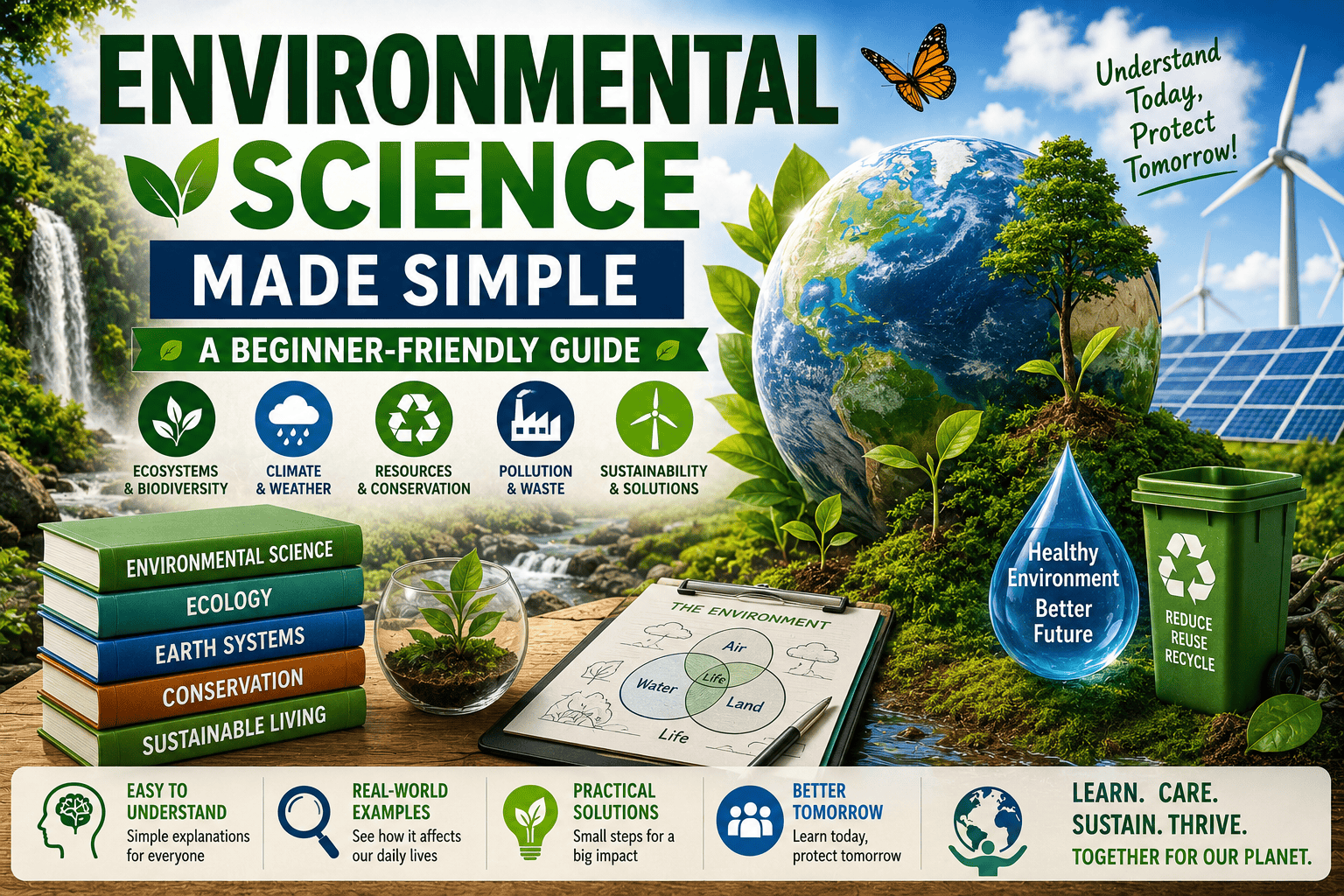
Environmental science is the interdisciplinary study of the natural world and how human activity interacts with and impacts ecosystems, climate, and natural resources. It draws on biology, chemistry, geology, and other fields to examine issues like pollution, climate change, biodiversity loss, and sustainable resource management. By analyzing complex environmental systems, this field seeks practical solutions to protect ecosystems and promote a sustainable balance between human development and the natural world. At its core, environmental science asks how we can understand and address our impact on the planet’s health and future.
Content Overview
- Philosophy Introduction
- Introduction to Environmental Science
- Environmental Science, Ecology, and Human–Earth Relationship
- 1 Environmental Science & Ecology
- 2 Environmental Philosophy
- 3 Conservation
- 4 Climate Change and Global Warming
- 5 Sustainable Development and Green Technologies
- 6 Geography
- 7 Relationship Between Environmental Science and Geography
- Conclusion
- Chapter 1: The Earth’s Systems
- Chapter 2: Ecosystems and Biodiversity
- Chapter 3: Energy Flow and Nutrient Cycles
- Chapter 4: Population Ecology
- Chapter 5: Environmental Pollution
- Chapter 6: Climate Change
- Chapter 7: Natural Resources and Sustainability
- Chapter 8: Environmental Policy and Management
- Chapter 9: Conservation Biology
- Chapter 10: Urban Ecology and Sustainable Cities
- Chapter 11: Environmental Ethics
- Chapter 12: Future Challenges and Innovations
- Conclusion
Philosophy Introduction
Introduction to Environmental Science
Introduction to Environmental Science
Environmental science is the study of how physical, chemical, and biological parts of the environment interact with each other. It incorporates aspects of biology, ecology, geology, meteorology, and chemistry to understand the complexities of the Earth’s systems. Understanding environmental science is crucial for addressing the pressing challenges we face today, including climate change, resource depletion, and pollution.
Definition of Environmental Science
Environmental Science is the scientific study of the environment, including the physical, chemical, and biological components of Earth and the interactions between humans and nature. It seeks to understand environmental problems and develop solutions for a sustainable future.
In simple words, environmental science explains how nature works, how humans affect it, and how we can protect it.
Real-world example:
Studying air pollution in cities to understand its effects on human health and climate.
Importance of Environmental Science
Environmental science is important because it helps us understand and address environmental challenges.
- Protect natural resources
- Control pollution
- Understand climate change
- Maintain biodiversity
- Ensure sustainable development
Example:
Understanding water pollution helps governments provide clean drinking water.
Interdisciplinary Nature of Environmental Science
Environmental science combines knowledge from:
- Biology (ecosystems, biodiversity)
- Chemistry (pollutants, reactions)
- Physics (energy flow, climate)
- Geography (land use)
- Economics and sociology (human impact)
Example:
Climate change studies involve physics (heat transfer), chemistry (greenhouse gases), and social sciences (human behavior).
Environmental Science, Ecology, and Human–Earth Relationship
Environmental science studies how humans interact with nature, how ecosystems function, and how environmental problems can be solved.
It combines knowledge from many fields such as biology, geology, chemistry, and geography.
The subject focuses on four major areas:
- Environmental science and ecology: studying ecosystems and human impact
- Environmental Philosophy – ethical thinking about nature and environment
- Conservation and Climate Change: Focuses on preserving natural systems and addressing environmental challenges.
- Sustainable development and green technology: future-focused solutions
- Geography – study of Earth’s physical features and human populations
1 Environmental Science & Ecology
1.1 Environmental Science
Environmental Science is the interdisciplinary study of the environment and the interactions between humans and natural systems.
It examines:
- Natural ecosystems
- Pollution
- Resource use
- Biodiversity
- Climate change
- Environmental management
Example:
Scientists study how deforestation affects rainfall patterns and wildlife populations.
Environmental science integrates many sciences such as:
- Biology
- Chemistry
- Physics
- Geology
- Geography
Its main aim is to understand environmental issues and find ways to solve them.
1.2 Ecology
Ecology studies the relationships between living organisms and their surrounding environment.
The word ecology comes from:
- Oikos (Greek) = home
- Logos = study
So, ecology means the study of living organisms in their natural environment.
Ecology studies relationships between:
- plants
- animals
- microorganisms
- soil
- water
- climate
Example:
A forest ecosystem includes trees, animals, insects, soil nutrients, water, and sunlight.
1.3 Ecosystem
An ecosystem is a system made up of living organisms that interact with each other and with their physical surroundings.
Examples of ecosystems:
- Forest ecosystems
- Desert ecosystems
- Marine ecosystems
- Grassland ecosystems
- Freshwater ecosystems
Example:
A lake ecosystem includes fish, algae, bacteria, water chemistry, and sunlight.
Ecologists study how energy and nutrients move through ecosystems.
One key ecological process is:
Photosynthesis
In this process plants convert sunlight into energy, forming the base of the food chain.
1.4 Food Chains and Food Webs
Energy in ecosystems moves through food chains.
Example food chain:
Plants → Herbivores → Carnivores → Decomposers
Example:
Grass → Rabbit → Fox → Bacteria
Food webs are more complex networks of many food chains interacting together.
1.5 Human Impact on Ecosystems
Human activities greatly affect ecosystems.
Major impacts include:
- deforestation
- pollution
- climate change
- urbanization
- overfishing
- habitat destruction
Example:
Large-scale deforestation in tropical regions reduces biodiversity and increases atmospheric carbon dioxide.
2 Environmental Philosophy
Environmental philosophy explores ethical questions about nature and humanity’s relationship with the environment.
It asks questions such as:
- Do humans have the right to dominate nature?
- Should nature be protected even if humans gain no benefit?
- What responsibilities do humans have toward future generations?
Environmental philosophy combines ethics, ecology, and human values.
2.1 Anthropocentrism
Anthropocentrism is the belief that humans hold the highest importance in the universe.
According to this view:
Nature has value mainly because it benefits humans.
Example:
Forests are valuable mainly for timber, medicine, and economic resources.
2.2 Biocentrism
Biocentrism is the belief that all living organisms have their own inherent value.
This philosophy suggests humans should respect all forms of life.
Example:
Protecting endangered animals even if they have no direct economic value.
2.3 Ecocentrism
Ecocentrism expands the idea further.
It believes entire ecosystems have value, not just individual organisms.
Example:
Protecting wetlands because they support complex ecological systems.
2.4 Existentialism and Environmental Responsibility
Existentialism emphasizes human freedom and responsibility.
From an environmental perspective:
Humans must take responsibility for the environmental consequences of their actions.
Example:
If human industries cause climate change, humans must choose ethical actions to solve it.
3 Conservation
Conservation refers to protecting natural resources and ecosystems from destruction or overuse.
Its main goal is to maintain biodiversity and ecological balance.
Conservation includes:
- wildlife protection
- forest preservation
- pollution control
- sustainable resource management
Example:
National parks are created to conserve wildlife habitats.
3.1 Pollution Control
Pollution occurs when harmful substances or contaminants are released into the environment, leading to adverse effects on ecosystems and living organisms.
Types of pollution:
Air Pollution
Caused by emissions from vehicles, factories, and the burning of fossil fuels.
Example:
Smog in major cities.
Major pollutant:
Carbon dioxide contributes to the greenhouse effect.
Water Pollution
Water pollution occurs when chemicals, waste, or plastics contaminate water bodies.
Example:
Industrial waste entering rivers.
Effects:
- fish death
- ecosystem damage
- unsafe drinking water
Soil Pollution
Soil contamination results from pesticides, chemicals, and industrial waste.
Example:
Heavy metals from factories accumulating in farmland.
Noise Pollution
Excessive sound from traffic and machinery harms human health and wildlife.
Example:
Airports produce high levels of noise pollution.
4 Climate Change and Global Warming
Climate change refers to lasting changes in global temperatures and weather patterns over extended periods of time.
The main driver today is human activity.
Important concept:
Global Warming
Global warming refers to the gradual increase in the Earth’s average temperature, primarily caused by the buildup of greenhouse gases in the atmosphere.
Major greenhouse gases include:
- carbon dioxide
- methane
- nitrous oxide
These gases retain heat in the atmosphere through the greenhouse effect.
4.1 Causes of Climate Change
Major causes include:
- Burning fossil fuels
- Deforestation
- Industrial pollution
- Agriculture emissions
- Transportation
Example:
Cars burning gasoline release carbon dioxide into the atmosphere.
4.2 Effects of Climate Change
Climate change causes many global problems.
Examples:
- rising sea levels
- melting glaciers
- extreme weather
- droughts
- ecosystem collapse
Example:
Melting ice in Antarctica contributes to rising ocean levels.
4.3 Climate Change Solutions
Solutions involve reducing greenhouse gas emissions.
Major solutions include:
Renewable Energy
Switching to renewable energy sources rather than relying on fossil fuels.
Examples:
- solar energy
- wind energy
- hydroelectric power
- geothermal energy
Energy Efficiency
Reducing energy consumption through better technology.
Example:
LED lights consume much less electricity compared to traditional bulbs.
Reforestation
Planting trees to absorb carbon dioxide.
Example:
Large tree-planting programs restore forests and improve climate stability.
Sustainable Transportation
Reducing vehicle emissions.
Examples:
- electric cars
- public transport
- cycling infrastructure
5 Sustainable Development and Green Technologies
5.1 Sustainable Development
Sustainable development means fulfilling today’s needs without harming the ability of future generations to meet their own needs.
This concept was popularized by the:
United Nations.
Sustainable development balances three pillars:
1 Economic growth
2 Environmental protection
3 Social well-being
Example:
A city that develops renewable energy while protecting forests and improving quality of life.
5.2 Renewable Energy
Renewable energy comes from naturally replenishing sources.
Examples:
Solar energy uses sunlight to generate electricity.
Wind turbines convert wind into power.
Hydropower uses flowing water to generate electricity.
Renewable energy reduces greenhouse gas emissions.
5.3 Green Technologies
Green technologies are innovations designed to reduce environmental impact.
Examples include:
- electric vehicles
- solar panels
- biodegradable materials
- energy-efficient buildings
Example:
Green architecture designs buildings that consume minimal energy.
6 Geography
Geography is the study of Earth’s physical features and the people who live on it.
The field of study is commonly divided into two primary branches.
6.1 Physical Geography
Physical geography focuses on the natural features of the Earth and the processes that shape them, such as landforms, climate, vegetation, and water systems.
Major topics include:
- mountains
- rivers
- oceans
- climate
- ecosystems
- landforms
Example:
The Himalayan mountain range formed due to tectonic plate collision.
Physical geography overlaps with geology and meteorology.
6.2 Human Geography
Human geography studies how humans interact with the environment and organize space on Earth.
Topics include:
- population distribution
- urbanization
- migration
- agriculture
- cultural landscapes
Example:
Large cities grow near rivers or coasts because of trade and transportation advantages.
Human geography helps understand economic development and environmental impact.
7 Relationship Between Environmental Science and Geography
Environmental science and geography are closely connected.
Environmental science focuses on environmental systems and solutions.
Geography focuses on how things are distributed across space and how humans interact with the environment.
Example:
Environmental scientists may study pollution in a river.
Geographers analyze how that pollution affects nearby communities and land use.
Conclusion
Environmental science and related fields help humanity understand the complex relationship between nature, ecosystems, and human society.
Key areas include:
Environmental science and ecology, which study ecosystems and biological interactions.
Environmental philosophy, which explores ethical responsibilities toward nature.
Conservation and pollution control, which aim to protect natural resources.
Climate change research, which investigates global warming and its solutions.
Sustainable development and green technologies encourage economic progress while protecting the environment.
Geography, which analyzes Earth’s physical landscapes and human societies.
Together, these disciplines provide the knowledge needed to address major environmental challenges such as pollution, biodiversity loss, and Global Warming while ensuring a sustainable future for the planet Earth.
Chapter 1: The Earth’s Systems
Earth functions as a single integrated system made of interacting subsystems.
The Earth’s Systems
– The Atmosphere: The layer of gases surrounding the Earth, critical for weather and climate regulation.
The Hydrosphere: Includes all forms of water on Earth, such as oceans, rivers, and lakes, which are vital for sustaining life.
– The Lithosphere: The solid outer part of the Earth, consisting of rocks and soil, playing a crucial role in ecosystems.
– The Biosphere: The global sum of all ecosystems, where life exists and interacts with the other Earth systems.
– Example: The interaction between the atmosphere and hydrosphere in the water cycle, illustrating how evaporation, condensation, and precipitation contribute to weather patterns.
The Atmosphere
The atmosphere is the layer of gases that surrounds the Earth.. It provides oxygen, regulates temperature, and protects life from harmful radiation.
Example:
The ozone layer absorbs ultraviolet (UV) radiation coming from the sun.
The Hydrosphere
The hydrosphere includes all the water on Earth, such as oceans, rivers, lakes, glaciers, and groundwater.
Example:
Oceans regulate global climate by storing heat.
The Lithosphere
The lithosphere consists of Earth’s crust and upper mantle. It includes rocks, soil, and minerals.
Example:
Fertile soil supports agriculture and food production.
The Biosphere
Biosphere encompasses all living organisms as well as the ecosystems they inhabit across the planet.
Example:
Forests, coral reefs, and grasslands are part of the biosphere.
Interaction Between Earth’s Systems
All systems interact continuously.
Example:
Volcanic eruptions (lithosphere) release gases into the atmosphere, affecting climate and ecosystems.
Chapter 2: Ecosystems and Biodiversity
Ecosystems and Biodiversity
– Definition and Types of Ecosystems: Ecosystems can be terrestrial (forests, deserts) or aquatic (freshwater, marine) and consist of living organisms and their physical environment.
– Importance of Biodiversity: Biodiversity contributes to ecosystem resilience, productivity, and provides resources such as food, medicine, and raw materials.
– Threats to Biodiversity: Habitat loss, climate change, pollution, overexploitation, and invasive species.
– Example: The role of keystone species, like sea otters in kelp forests, illustrates how certain species maintain the structure and health of their ecosystems.
Ecosystems
An ecosystem is made up of living organisms and their physical environment, all interacting together as a system.
Types of ecosystems:
- Terrestrial (forests, deserts)
- Aquatic (oceans, rivers)
Example:
A pond ecosystem includes fish, plants, water, and microorganisms.
Importance of Biodiversity
Biodiversity describes the wide variety of living organisms found on Earth. It ensures:
- Ecosystem stability
- Food security
- Medicinal resources
Example:
Many medicines are derived from plant compounds.
Threats to Biodiversity
- Habitat destruction
- Pollution
- Climate change
- Overexploitation
Example:
Deforestation threatens species like orangutans.
Keystone Species
Keystone species are organisms that have a very large impact on an ecosystem relative to their abundance.
Example:
Sea otter play an important ecological role by controlling populations of Sea urchin, which helps protect and maintain healthy kelp forest ecosystems.
Chapter 3: Energy Flow and Nutrient Cycles
Energy Flow and Nutrient Cycles
– Food Chains and Food Webs: Energy flows from producers to consumers and decomposers in a structured manner, highlighting the interdependence of organisms.
– The Water Cycle: Describes the continuous movement of water within the Earth and atmosphere, essential for all living organisms.
The carbon cycle shows how carbon moves between the biosphere, geosphere, hydrosphere, and atmosphere.
– The Nitrogen Cycle: Explains how nitrogen is converted into various chemical forms and made available to living organisms.
– Example: Deforestation’s impact on the carbon cycle, leading to increased atmospheric carbon dioxide levels and contributing to global warming.
Food Chains and Food Webs
In ecosystems, energy flows from producers to consumers through food chains and food webs.
Example:
Grass → Deer → Lion
The Water Cycle
Water circulates through the environment through evaporation, condensation, precipitation, and runoff.
Example:
Rainfall replenishes rivers and groundwater.
The Carbon Cycle
Carbon moves between atmosphere, organisms, and Earth.
Example:
Plants absorb CO₂ during photosynthesis.
The Nitrogen Cycle
Nitrogen is recycled through fixation, nitrification, and denitrification.
Example:
Certain bacteria transform atmospheric nitrogen into forms that plants can absorb and use.
Impact of Deforestation
Deforestation disrupts the carbon cycle by reducing CO₂ absorption.
Example:
Amazon deforestation contributes to global warming.
Chapter 4: Population Ecology
Population Ecology
– Population Dynamics: Examines how populations of species change over time and the factors influencing these changes.
– Carrying Capacity and Limiting Factors: The maximum population size that an environment can sustain, influenced by resources, predation, and competition.
– Human Population Growth: Discusses the implications of exponential growth on resources and ecosystems.
– Example: The ecological footprint of urban areas and how increasing population density impacts local ecosystems and resource consumption.
Population Dynamics
Population ecology studies changes in population size over time.
Example:
Rabbit populations increase rapidly when food is abundant.
Carrying Capacity
Carrying capacity is the largest population that an environment can support over time.
Example:
Overgrazing reduces grass availability, lowering animal populations.
Human Population Growth
Rapid population growth increases pressure on resources.
Example:
Urban overcrowding leads to waste and pollution problems.
Ecological Footprint
Measures human demand on Earth’s ecosystems.
Example:
Urban areas generally use more energy and resources than rural regions due to higher population density, greater infrastructure demands, and more intensive economic activity.
Chapter 5: Environmental Pollution
Environmental Pollution
– Types of Pollution: Air pollution (e.g., smog), water pollution (e.g., industrial runoff), soil pollution (e.g., pesticides), and noise pollution.
– Sources and Effects of Pollution: Industrial activities, transportation, and agricultural practices contribute to pollution, affecting health and ecosystems.
– Case Studies: Significant pollution events such as the Love Canal incident or the Deepwater Horizon oil spill.
– Example: Plastic pollution in oceans and its impact on marine life, including ingestion by wildlife and the disruption of food chains.
Types of Pollution
- Air pollution (smog)
- Water pollution (oil spills)
- Soil pollution (pesticides)
- Noise pollution
Sources and Effects
Pollution harms health, wildlife, and ecosystems.
Example:
Air pollution causes respiratory diseases.
Major Pollution Events
Industrial accidents demonstrate environmental risks.
Example:
The Bhopal gas tragedy resulted in a massive loss of life.
Plastic Pollution
Plastics persist for centuries.
Example:
Sea turtles mistake plastic bags for jellyfish.
Chapter 6: Climate Change
Climate Change
– Causes of Climate Change: Primarily due to human activities like burning fossil fuels, deforestation, and industrial processes that increase greenhouse gas concentrations.
– Evidence and Effects of Climate Change: Rising global temperatures, melting ice caps, changing precipitation patterns, and extreme weather events.
– Mitigation and Adaptation Strategies: Reducing carbon emissions, enhancing energy efficiency, and developing renewable energy sources.
– Example: The melting of Arctic ice and its effects on global sea levels and polar ecosystems.
Causes of Climate Change
- Greenhouse gas emissions
- Deforestation
- Fossil fuel use
Evidence and Effects
- Rising temperatures
- Melting glaciers
- Sea-level rise
Example:
Increased flooding in coastal cities.
Mitigation and Adaptation
- Renewable energy
- Climate-resilient infrastructure
Example:
Sea walls protect coastal areas.
Arctic Ice Melting
Accelerates global warming through reduced albedo.
Chapter 7: Natural Resources and Sustainability
Natural Resources and Sustainability
– Types of Natural Resources: Renewable resources (solar, wind, biomass) vs. non-renewable resources (fossil fuels, minerals).
– Sustainable Resource Management: Practices that aim to use resources in a way that meets present needs without compromising future generations.
– Example: The use of solar energy as a renewable resource, highlighting its advantages over fossil fuels in terms of sustainability and environmental impact.
Renewable and Non-renewable Resources
- Renewable: solar, wind
- Non-renewable: coal, oil
Sustainable Resource Management
Using resources without exhausting them.
Example:
Sustainable fishing prevents population collapse.
Solar Energy
Clean and renewable energy source.
Chapter 8: Environmental Policy and Management
Environmental Policy and Management
– Environmental Legislation and Regulation: Overview of key laws and regulations aimed at protecting the environment (e.g., Clean Air Act, Clean Water Act).
– International Environmental Agreements: Treaties such as the Paris Agreement and their role in global environmental governance.
Governments and NGOs play an important role in creating policies and promoting actions that support environmental protection.
– Example: The success of the Montreal Protocol in phasing out substances that deplete the ozone layer and its positive impact on atmospheric recovery.
Environmental Laws
Regulate pollution and conservation.
International Agreements
Global cooperation is essential.
Example:
Montreal Protocol successfully reduced ozone-depleting substances.
Role of NGOs
NGOs raise awareness and implement conservation projects.
Chapter 9: Conservation Biology
Conservation Biology
– Principles of Conservation: Focuses on protecting species, habitats, and ecosystems to maintain biodiversity and ecosystem services.
– Strategies for Biodiversity Conservation: Approaches include habitat preservation, restoration, and the establishment of protected areas.
– Protected Areas: The importance of national parks, wildlife reserves, and marine protected areas in conserving biodiversity.
– Example: The role of national parks, such as Yellowstone, in preserving ecosystems and providing a habitat for diverse species.
Principles of Conservation
Protect species, habitats, and ecosystems.
Conservation Strategies
- Wildlife corridors
- Captive breeding
Protected Areas
National parks preserve biodiversity.
Example:
Yellowstone National Park protects diverse ecosystems.
Chapter 10: Urban Ecology and Sustainable Cities
Urban Ecology and Sustainable Cities
– Challenges of Urbanization: Rapid urban growth leads to environmental challenges such as habitat destruction, pollution, and resource depletion.
– Green Infrastructure and Sustainable Practices: Concepts such as urban green spaces, sustainable transportation, and energy-efficient buildings.
– The Concept of Eco-Cities: Cities designed with sustainable principles to reduce ecological footprints.
– Example: The implementation of green roofs in urban areas, which can reduce energy consumption and improve air quality.
Urbanization Challenges
- Pollution
- Waste management
- Heat islands
Green Infrastructure
Eco-friendly urban design.
Example:
Green roofs reduce temperature and absorb rainwater.
Eco-Cities
Cities designed for sustainability.
Chapter 11: Environmental Ethics
Environmental Ethics
– Ethical Theories and Environmental Decision-Making: Different philosophical approaches to environmental ethics and their implications for policy and behavior.
– The Relationship Between Humans and Nature
Ethical Theories
Examine moral responsibility toward nature.
Humans and Nature
Ethics guide conservation decisions.
Indigenous Perspectives
Emphasize harmony with nature.
Example:
Traditional land stewardship practices preserve ecosystems.
Chapter 12: Future Challenges and Innovations
Emerging Issues
- Climate refugees
- Resource scarcity
Role of Technology
- Renewable energy
- Bioremediation
Community Involvement
Grassroots movements drive change.
Example:
Local tree-planting initiatives improve urban environments.
Conclusion
Environmental science teaches us that human survival depends on healthy ecosystems. Protecting the environment is not optional—it is essential for future generations.