Asian History
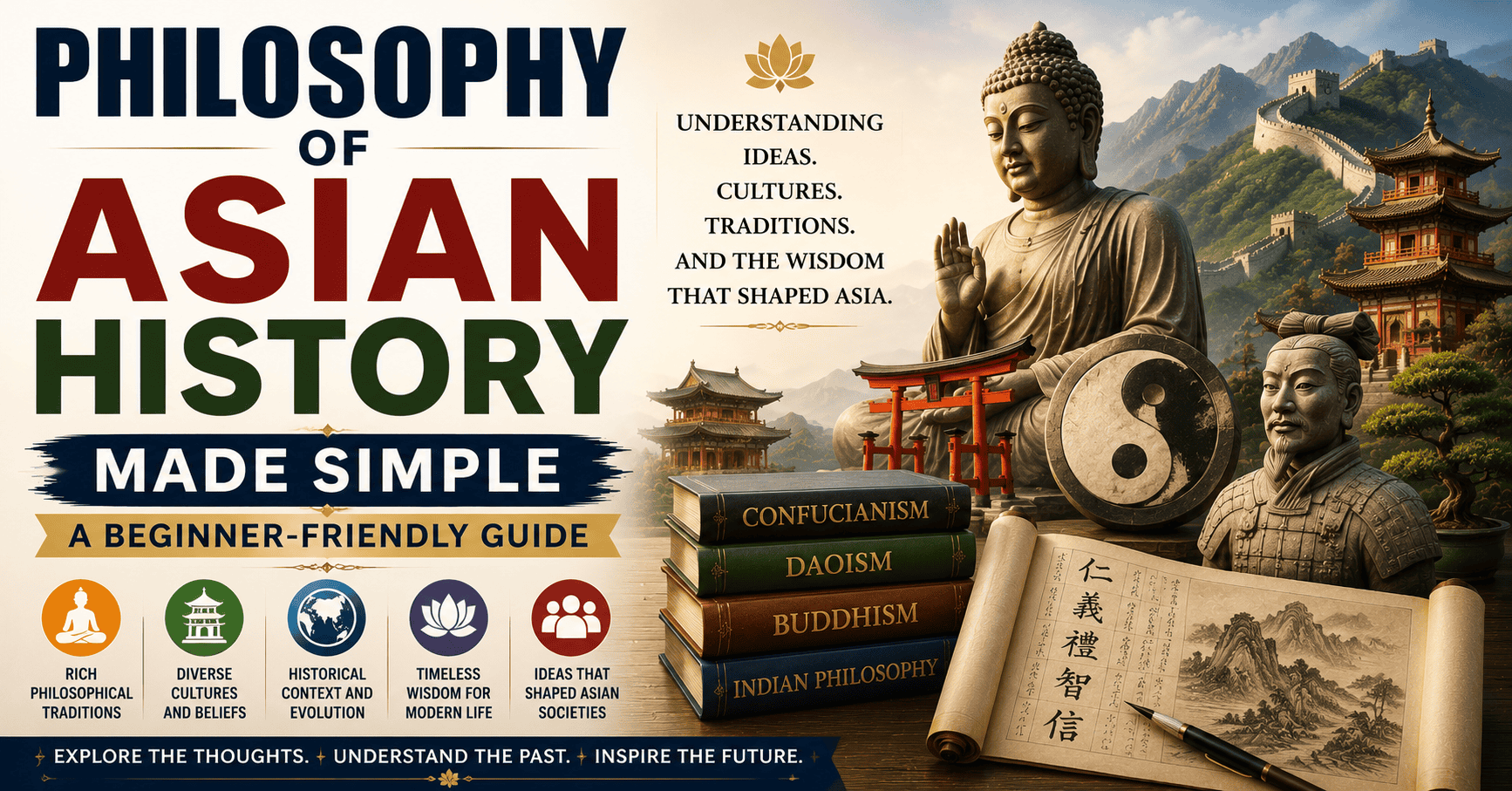
Asian history spans the vast and diverse civilizations of the continent, from ancient dynasties in China and India to the empires, kingdoms, and cultures of Japan, Korea, Southeast Asia, and the Middle East. It traces the rise and fall of powerful states, the spread of major religions and philosophies, and the trade networks like the Silk Road that connected distant societies. This history reflects extraordinary diversity — encompassing everything from imperial bureaucracies and feudal systems to colonial struggles and modern nation-building. At its core, Asian history reveals how varied civilizations across the continent shaped, and were shaped by, both internal transformation and cross-cultural exchange.
Content Overview
- Asia: History, Wars & Civilizations
- 3. The Six Regions of Asia
- 1. Northern Asia
- 2. Central Asia
- 3. Eastern Asia (East Asia)
- 4. Western Asia (Middle East)
- 5. Southern Asia (South Asia)
- 6. Southeast Asia
- 4. Asia and the Development of Civilizations
- 5. Religions Originating in Asia
- 6. Climate and Geography of Asia
- Simple Summary
Asia: History, Wars & Civilizations
1. What is Asia?
Asia is the world’s largest continent. It is the biggest both in land area and population.
- Area: about 44 million square kilometers
- Around 30% of Earth’s land
- Population: about 4.7 billion people
- Nearly 60% of the world’s population
Asia is also the birthplace of many ancient civilizations, cultures, and religions.
2. Location and Borders of Asia
Asia is part of the large landmass called Eurasia, which includes Europe and Asia together.
Asia is surrounded by oceans:
- East: Pacific Ocean
- South: Indian Ocean
- North: Arctic Ocean
Borders with other continents
Asia is separated from:
- Africa by the Suez Canal
- Europe by:
- Ural Mountains
- Ural River
- Caucasus Mountains
- Caspian Sea
- Black Sea
These borders are historical and cultural, not purely natural.
3. The Six Regions of Asia
Asia is typically divided into six major regions.
1. Northern Asia
Mainly Russia’s Asian territory.
Example:
- Siberia
Characteristics:
- Very cold climate
- Large forests and tundra
- Rich in oil, gas, and minerals
- Very low population
Important in history for:
- Russian expansion
- Trade routes across Siberia
2. Central Asia
Countries include:
- Kazakhstan
- Uzbekistan
- Turkmenistan
- Kyrgyzstan
- Tajikistan
Important features:
- Mostly steppes and deserts
- Historically home to nomadic tribes
Central Asia was important because of the Silk Road, the famous trade route connecting China and Europe.
Goods traded included:
- Silk
- Spices
- Gold
- Knowledge
- Culture
Many wars and invasions happened here because armies moved through these routes.
Example:
- Mongol expansions under Genghis Khan
3. Eastern Asia (East Asia)
Major countries:
- China
- Japan
- South Korea
- North Korea
- Mongolia
This region produced some of the world’s oldest civilizations.
Ancient Chinese dynasties developed:
- Writing
- Paper
- Gunpowder
- Printing
Important philosophies and religions began here:
- Confucianism
- Taoism
East Asia was one of the world’s richest regions for many centuries.
Between 1 CE and 1800 CE, China and India were the world’s largest economies.
4. Western Asia (Middle East)
Also called the Middle East.
Countries include:
- Turkey
- Iran
- Iraq
- Saudi Arabia
- Israel
- Syria
This region is extremely important historically.
It is the birthplace of many religions:
- Judaism
- Christianity
- Islam
- Zoroastrianism
The region also experienced many wars because of:
- religion
- oil resources
- strategic location
Important conflicts include:
- Crusades
- Arab–Israeli conflict
5. Southern Asia (South Asia)
Countries include:
- India
- Pakistan
- Bangladesh
- Nepal
- Sri Lanka
This region contains one of the oldest civilizations:
- Indus Valley Civilization
South Asia is also the birthplace of several religions:
- Hinduism
- Buddhism
- Jainism
- Sikhism
The region has experienced many important historical conflicts such as:
- Partition of India
6. Southeast Asia
Countries include:
- Indonesia
- Thailand
- Vietnam
- Malaysia
- Philippines
- Singapore
This region was very important in sea trade.
One of the most important sea routes is:
- Strait of Malacca
It connects:
- Indian Ocean
- Pacific Ocean
Because of this trade route, the region became a meeting place for:
- Chinese culture
- Indian culture
- Islamic culture
- European colonial powers
Wars and colonial history include:
- Vietnam War
4. Asia and the Development of Civilizations
Asia served as a cradle of early human civilization.
Important civilizations include:
- Indus Valley Civilization
- Ancient Chinese civilization
- Mesopotamian civilization
These civilizations developed:
- agriculture
- cities
- writing
- mathematics
- philosophy
- trade networks
5. Religions Originating in Asia
Most of the world’s major religions started in Asia.
Examples:
- Buddhism
- Hinduism
- Islam
- Christianity
- Judaism
- Sikhism
These religions later spread to Europe, Africa, and the rest of the world.
6. Climate and Geography of Asia
Asia has very diverse climates.
Types include:
- Equatorial rainforests (Southeast Asia)
- Deserts (Arabian Peninsula, Central Asia)
- Temperate regions (China, Korea, Japan)
- Arctic tundra (Northern Asia)
Example deserts:
- Gobi Desert
- Arabian Desert
Example mountain ranges:
- Himalayas
Simple Summary
Asia is:
- The largest and most populated continent
- Home to ancient civilizations
- Birthplace of many major religions
- Center of global trade routes like the Silk Road
- Divided into six regions:
- Northern Asia
- Central Asia
- Eastern Asia
- Western Asia
- Southern Asia
- Southeast Asia
Each region has different cultures, languages, climates, and histories.