Medical Sciences
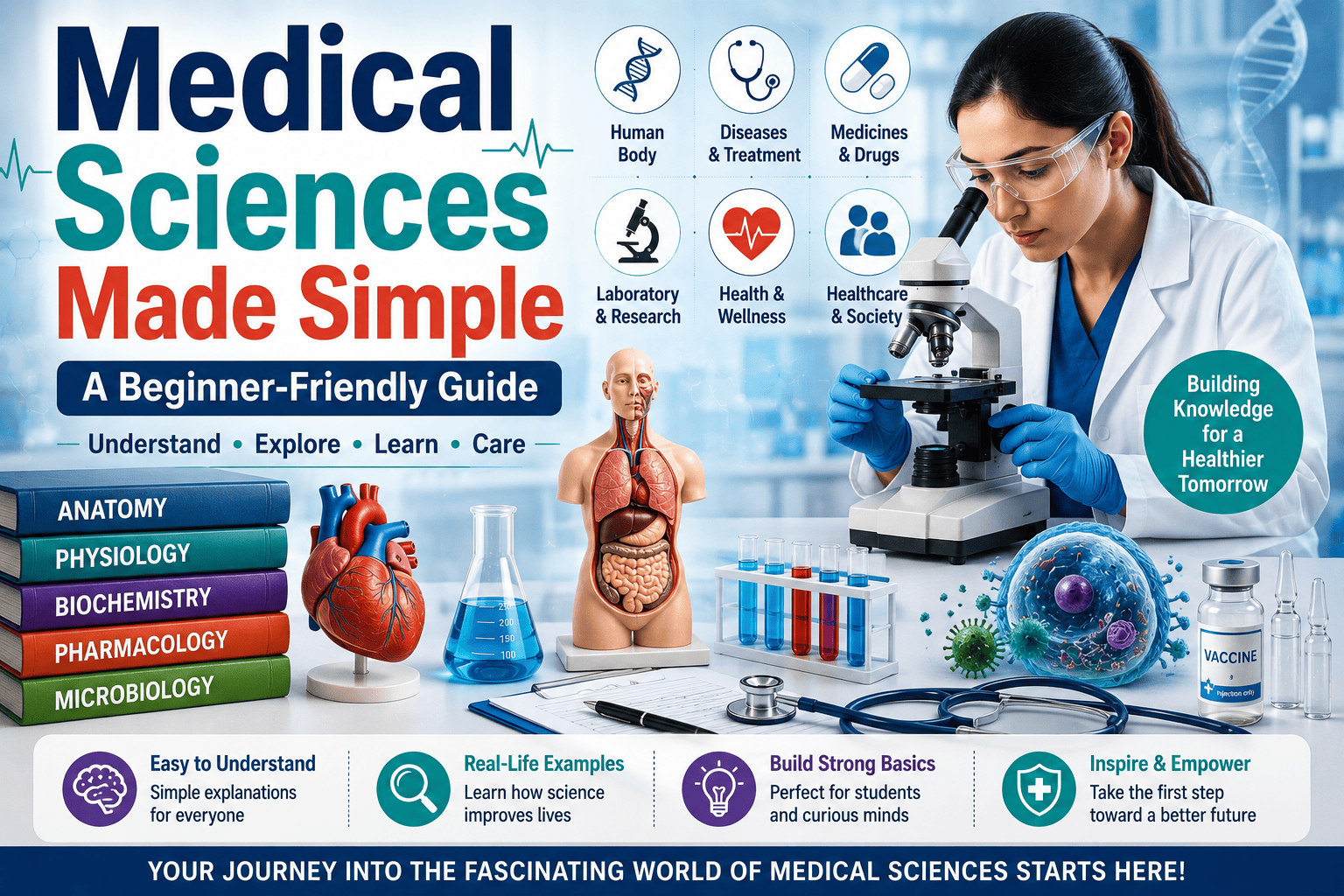
Medical sciences encompass the study of the human body, disease, and health, integrating fields like anatomy, physiology, pathology, and pharmacology to understand how the body functions and how it can be healed. This discipline combines biological knowledge with clinical practice to diagnose, treat, and prevent illness, driving advances in medicine, surgery, and public health. Through research and evidence-based methods, medical sciences continually refine our understanding of disease mechanisms and develop new therapies and technologies. At its core, it seeks to understand and improve human health and the treatment of illness.
- 1. Medical Sciences
- 1.2 Pharmacology
- 1.3 Surgery
- 1.4 Psychiatry
- 1.5 Public Health
- 2. Biotechnology & Genetics
- 2.2 Genetic Engineering
- 2.3 Biotechnology Applications
- 3. Pharmacology & Pharmaceuticals
- 4. Medicine & Healthcare
- 5. Stem Cells & Personalized Medicine
- 6. Biomedical Engineering
- 7. Agricultural Science
- Conclusion
1. Medical Sciences
1.1 Definition
Medical Science studies the diagnosis, treatment, and prevention of diseases affecting humans.
It integrates knowledge from:
- Biology
- Chemistry
- Physiology
- Pharmacology
- Public health
Example:
Doctors treating infections, surgeons performing operations, and psychiatrists treating mental disorders are all applying medical science.
Major branches include:
- Pharmacology
- Surgery
- Psychiatry
- Public Health
1.2 Pharmacology
Definition
Pharmacology is the study of how drugs interact with living systems in the body.
It examines:
- How drugs are created
- How they work in the body
- Their side effects
- Proper dosage
Example:
The drug Aspirin relieves pain and reduces inflammation by inhibiting chemicals known as prostaglandins.
Subfields of Pharmacology
1. Drug Discovery
Scientists search for chemical compounds that can treat diseases.
Example:
Researchers identified molecules that could treat bacterial infections, leading to the discovery of Penicillin.
2. Experimental Pharmacology
Drugs are tested in laboratories and animals to study their effects.
Example:
A new drug candidate might be tested on mice to determine toxicity.
3. Clinical Pharmacology
The study of drugs in human patients.
Example:
Testing a new blood pressure medication on volunteers helps researchers evaluate its safety and effectiveness.
1.3 Surgery
Definition
Surgery is the medical discipline that treats diseases through operative procedures.
Surgeons physically repair or remove damaged tissues or organs.
Types of Surgery
General Surgery
Treats abdominal organs such as:
- stomach
- liver
- intestines
Example:
Appendix removal surgery.
Cardiovascular Surgery
Operations involving the heart and blood vessels.
Example:
Coronary artery bypass surgery for heart disease.
Neurosurgery
Operations involving the brain and nervous system.
Example:
Removing brain tumors.
Orthopedic Surgery
Treats bones, joints, and muscles.
Example:
Hip replacement surgery.
1.4 Psychiatry
Definition
Psychiatry is the branch of medicine dealing with mental health conditions.
It focuses on:
- emotional disorders
- psychological illnesses
- behavioral issues
Example conditions:
- Depression
- Schizophrenia
- Anxiety disorder
Treatments
Psychiatrists use:
- psychotherapy
- medications
- behavioral therapy
Example:
Antidepressant medications may treat depression.
1.5 Public Health
Definition
Public Health focuses on health of populations rather than individuals.
Goals:
- prevent diseases
- promote healthy lifestyles
- manage epidemics
Example:
Vaccination campaigns to prevent infectious diseases.
2. Biotechnology & Genetics
2.1 Definition
Biotechnology uses living organisms or biological processes to create products useful to humans.
Closely related is Genetics, which explains how traits are inherited.
Example:
Producing insulin using genetically engineered bacteria.
2.2 Genetic Engineering
Definition
Genetic engineering involves modifying an organism’s DNA to achieve desired traits.
Example:
Scientists can modify crops to resist pests.
Techniques
One important tool is:
CRISPR gene editing
CRISPR is a tool that lets scientists cut and edit specific DNA sequences.
Example:
Correcting genetic mutations responsible for diseases.
2.3 Biotechnology Applications
Biotechnology has many applications.
Medicine
Producing vaccines and therapeutic proteins.
Example:
The COVID-19 vaccines were developed using advanced biotechnology methods.
Agriculture
Improving crop yield and resistance.
Example:
Genetically modified corn resistant to pests.
Environmental Science
Biotechnology can clean pollution.
Example:
Certain bacteria can break down oil spills.
3. Pharmacology & Pharmaceuticals
3.1 Drug Development
Drug development is the process of discovering and creating new medicines.
Steps include:
- Discovery
- Laboratory testing
- Clinical trials
- Regulatory approval
- Manufacturing
Example:
Cancer drugs may take 10–15 years to develop.
3.2 Clinical Trials
Clinical trial
Clinical trials test whether a new drug is:
- safe
- effective
- better than existing treatments
Phases:
Phase I – safety testing
Phase II – effectiveness
Phase III – large patient trials
Phase IV – post-marketing monitoring
Example:
Testing new treatments for diseases like Cancer.
3.3 Pharmacokinetics
Pharmacokinetics
It studies four processes:
- Absorption
- Distribution
- Metabolism
- Excretion
Example:
A painkiller tablet is absorbed in the stomach and later metabolized by the liver.
3.4 Drug Policy and Healthcare
Drug policy determines:
- drug approval
- safety regulations
- pricing
- access
Example:
Governments regulate medicines to prevent unsafe drugs from reaching the public.
Organizations such as the World Health Organization play a role in global health policies.
4. Medicine & Healthcare
4.1 Anatomy
Anatomy is the branch of science that examines the structure of the human body.
It includes organs like:
- heart
- lungs
- brain
- liver
Example:
Medical students study anatomy using cadavers and digital models.
4.2 Physiology
Physiology
Physiology explains how organs perform their functions.
Example:
The heart circulates blood throughout the body via the circulatory system.
4.3 Medical Research
Medical research seeks to discover:
- causes of diseases
- new treatments
- preventive strategies
Example:
Researchers studying vaccines for infectious diseases.
4.4 Clinical Practice
Clinical practice refers to direct patient care by healthcare professionals.
Example:
Doctors diagnosing infections and prescribing medication.
4.5 Healthcare Systems
Healthcare systems organize medical services in society.
Components include:
- hospitals
- clinics
- insurance systems
- public health agencies
Example:
National health systems provide healthcare services to citizens.
5. Stem Cells & Personalized Medicine
Stem Cells
Stem cells
Stem cells have the ability to develop into many different types of body cells.
Example:
They may regenerate damaged tissues such as heart muscle after injury.
Personalized Medicine
Personalized medicine applies genetic information to design treatments suited to each individual.
Example:
Certain cancer drugs work only for patients with specific genetic mutations.
6. Biomedical Engineering
Definition
Biomedical Engineering
It combines engineering and medical sciences to develop medical technologies.
Medical Devices
Biomedical engineers design devices such as:
- pacemakers
- MRI scanners
- artificial limbs
Example:
A pacemaker helps regulate abnormal heart rhythms.
7. Agricultural Science
Definition
Agricultural Science studies techniques to increase food production while maintaining environmental sustainability.
7.1 Agronomy
Agronomy
Agronomy focuses on:
- soil health
- crop growth
- irrigation methods
Example:
Farmers rotate crops to maintain soil nutrients.
7.2 Animal Science
Animal Science
Animal science studies animals used in agriculture.
Example:
Improving milk production in dairy cattle.
Conclusion
Medical and life sciences are interdisciplinary fields focused on improving health, advancing biotechnology, and supporting sustainable food production.
Major areas include:
- Medical sciences focus on diagnosing and treating diseases through medicine and surgical procedures.
- Biotechnology and genetics involve studying DNA and altering biological systems for scientific and practical applications.
- Pharmacology and pharmaceuticals focus on creating and testing medicines that are safe and effective.
- Medicine and healthcare involve identifying diseases and providing proper treatment and patient care.
- Stem cell research and personalized medicine are advancing treatments designed around an individual’s genetic makeup, leading to more precise and effective healthcare.
- Biomedical Engineering – designing medical technologies
- Agricultural science focuses on enhancing food production and maintaining the health of livestock.
Together these disciplines contribute to longer life expectancy, better healthcare systems, advanced medical technologies, and improved global food security.