Biology
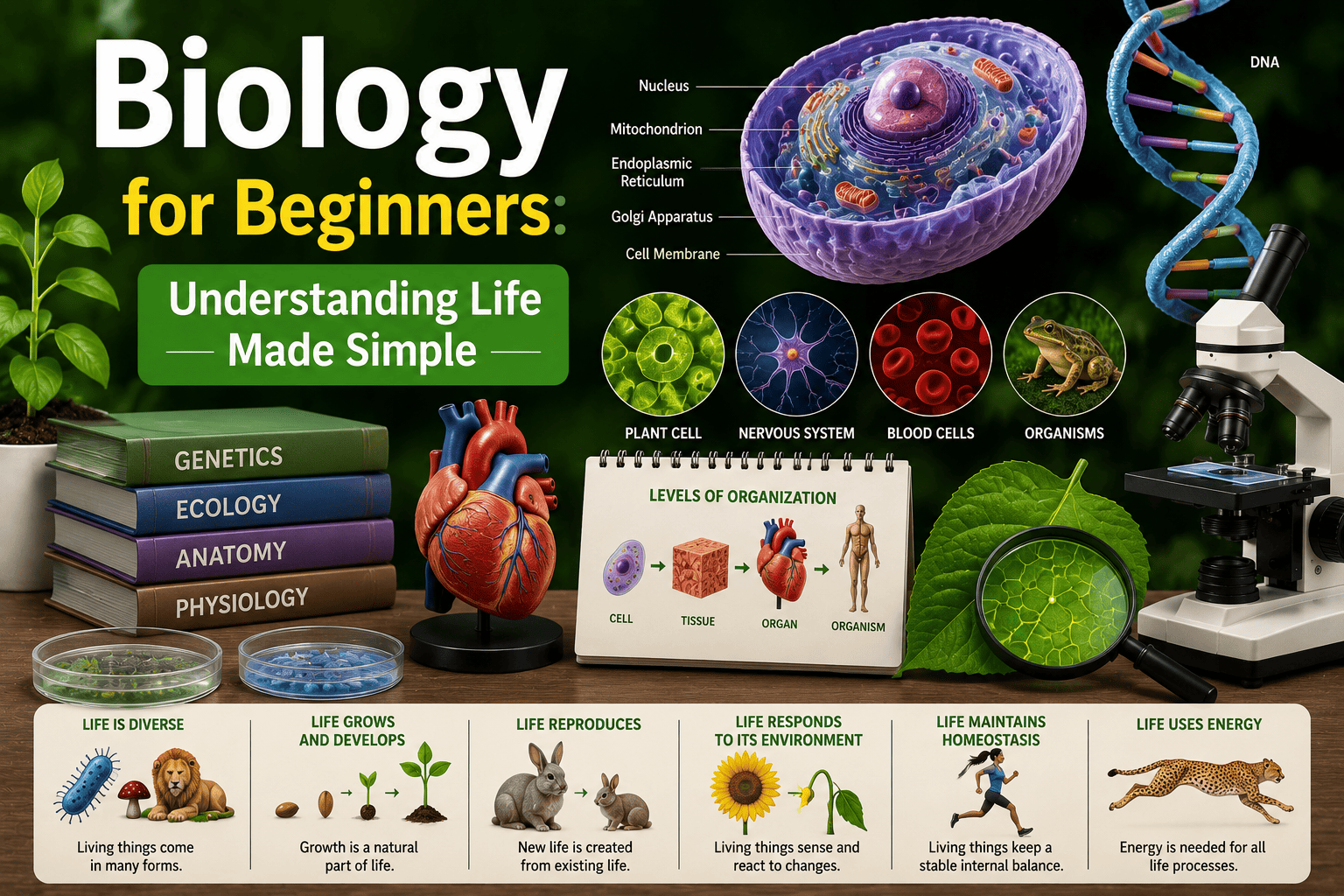
Explore the Science of Life and Living Systems — Biology is the scientific discipline devoted to understanding living organisms and the processes that enable them to survive, develop, reproduce, and adapt. It covers a broad range of subjects, including cell structure and function, genetics, evolution, physiology, behavior, and interactions between organisms and their environments. From microscopic cellular mechanisms to complex ecosystems, biology provides a comprehensive framework for studying the many forms and levels of life.
Using observation, experimentation, and evidence-based analysis, biology investigates both the remarkable diversity of organisms and the fundamental processes they share. It examines how living systems are organized, how traits are inherited and changed, and how organisms interact with one another and their surroundings. At its core, biology seeks to understand how life functions, how it changes over generations, and what processes allow living systems to exist and evolve.
- PART I — FOUNDATIONS OF LIFE
- PART II — CELLULAR LIFE
- PART III — GENETICS AND MOLECULAR BIOLOGY
- PART IV — EVOLUTION AND DIVERSITY
- PART V — MICROBIOLOGY AND INVISIBLE LIFE
- PART VI — PLANT AND ANIMAL LIFE
- PART VII — ECOLOGY AND ENVIRONMENTAL BIOLOGY
- PART VIII — BIOTECHNOLOGY AND APPLIED BIOLOGY
- PART IX — ADVANCED TOPICS IN BIOLOGY
- PART X — THE FRONTIERS OF BIOLOGY
- PART XI — CONCLUSION AND FUTURE DIRECTIONS
PART I — FOUNDATIONS OF LIFE
1. What Is Biology?
Biology is the scientific study of life. It explores how living organisms grow, function, reproduce, and interact with their environment. Biology helps us understand life at all levels, from tiny molecules to entire ecosystems, and provides the foundation for medicine, agriculture, environmental science, and biotechnology.
1.1 Definition of Biology as a Natural Science
Biology is a natural science that brings together different themes in the study of life. It involves the exploration of living organisms and their physical structures, biochemical processes, development, and interactions with one another and their environments. Several key themes run throughout biology: cellular organization, hereditary information, evolution, energy processing, and internal regulation. Biology is a natural science because it studies phenomena in the natural world using observation, experimentation, and reasoning. It focuses on living organisms, their structures, functions, and the processes that sustain life.
Natural science means it deals with observable, measurable phenomena in nature.
Biology combines knowledge from chemistry, physics, and earth science to explain life processes.
Example: Studying how plants perform photosynthesis combines chemistry (chemical reactions), physics (light energy), and biology (plant structure and function).
- Cellular Organization: All organisms consist of cells, the basic units of life. Cells vary in complexity, from single-celled bacteria to the trillions of cells that make up the human body. Each cell stores genetic information (DNA), allowing it to grow and reproduce.
Example: The study of stem cells, which can differentiate into various cell types, has implications for regenerative medicine.
Cell biology focuses on understanding the structure, functions, and processes of cells, which are the basic units of life. Researchers focus on cellular organelles, signaling pathways, and the cell cycle.
- Heredity and Genes: Life continues through the transmission of genetic information from one generation to the next. Genes, encoded within DNA, contain instructions for the development, behavior, and survival of organisms.
- Evolution: Evolutionary theory explains how life diversifies and adapts to changing environments. Through natural selection, organisms with favorable traits are more likely to survive and reproduce, passing these traits on to future generations.
Example: Observing finch populations on the Galápagos Islands revealed adaptations in beak size and shape, illustrating natural selection.
Evolutionary biology examines how species change over time due to genetic variation and environmental pressures.
- Energy Processing: Organisms require energy to grow, move, and reproduce. Plants, for example, harness energy from sunlight through photosynthesis, while animals derive energy by consuming other organisms.
- Homeostasis: To survive, organisms maintain stable internal conditions despite external changes. This self-regulation is essential for responding to environmental stressors.
Levels of Biological Organization
Biologists study life at various levels, from the smallest molecules to entire ecosystems. Here’s a look at these organizational levels:
Molecular and Cellular Biology: At this microscopic scale, biology examines the interactions within and between cells, including DNA replication, protein synthesis, and metabolic pathways. This area includes genetics and molecular biology.
Organismal Biology: This level focuses on the anatomy, physiology, and behavior of individual organisms. Studies range from the organ systems in animals to the structure and function of plants.
Ecology: Ecology investigates the relationships between organisms and their environments, examining ecosystems’ balance and biodiversity.
Evolutionary Biology: This level explores how populations of organisms change over time, adapting to environmental pressures and giving rise to new species
The History of Biology
The journey of biology as a science began thousands of years ago, with roots in ancient Egyptian and Mesopotamian medicine. Ancient Greek philosophers like Aristotle studied life scientifically, exploring causation and diversity in living organisms. Following Aristotle, Theophrastus began documenting plant life, establishing botany as a discipline.
The development of the microscope in the 17th century by Anton van Leeuwenhoek and the identification of microorganisms, sperm, and cell structure significantly advanced biology. Later, in the 19th century, German scientists Matthias Schleiden and Theodor Schwann promoted cell theory, recognizing cells as the building blocks of all life.
The concept of evolution emerged with the work of Jean-Baptiste Lamarck and later gained traction with Charles Darwin’s theory of natural selection in the 19th century. This theory explained how species evolve and adapt over generations. Genetics advanced through Gregor Mendel’s experiments on inheritance, laying the foundation for modern genetics.
In the 20th century, biology advanced into the molecular era with the discovery of DNA structure by James Watson and Francis Crick. The development of molecular biology, the genetic code, and genome sequencing, including the Human Genome Project (1990), allowed scientists to explore biology on an unprecedented level.
Main Branches of Biology with Examples
- Biology – The overarching study of life, from the smallest cells to entire ecosystems.Example: Studying ecosystems helps scientists understand biodiversity and support conservation efforts to protect species and their habitats.
- Aerobiology – Studies the dispersion of airborne organisms, like pollen or bacteria. Example: Examining how pollen travels through the air, affecting people with allergies during spring.
- Agrostology – Focuses on grasses and related plants. Example: Studying grassland ecosystems to learn about their role in preventing soil erosion.
- Anatomy – Examines the structure of living organisms, from humans to plants. Example: Dissecting frogs in a lab to understand vertebrate anatomy.
- Astrobiology – Explores life’s potential beyond Earth. Example: Studying extremophiles (organisms that thrive in extreme environments) to hypothesize about life on Mars.
- Bacteriology – Studies bacteria and their impact on health, ecosystems, and industry. Example: Researching antibiotic resistance to improve treatment for bacterial infections.
- Behavior Analysis – Investigates the principles of behavior, often to modify or understand responses. Example: Observing animal learning patterns to inform training methods for pets.
- Biotechnology – Applies biology to technology for useful applications, like medicine or agriculture. Example: Using genetically engineered bacteria to produce insulin for diabetes treatment.
- Biochemistry focuses on the chemical reactions and processes that occur within living organisms, helping explain how biological systems function at a molecular level.– Example: The study of enzymes reveals how biochemical reactions occur in living organisms, critical for metabolism and energy production. Biochemistry delves into the chemical processes within organisms, examining biomolecules like proteins, lipids, and nucleic acids. Example: Analyzing enzymes involved in digestion to understand how nutrients are absorbed.
- Bioinformatics is a field that uses computer-based tools to study and analyze biological data. Example: Sequencing genomes to understand genetic diseases.
- Biolinguistics explores how biological factors influence the development, structure, and evolution of language in humans.Example: Studying language abilities in apes to explore the origins of human communication.
- Biological Anthropology – Studies the evolution and biology of humans. Example: Analyzing ancient human remains to trace migration patterns and genetic diversity.
- Biological Oceanography – Examines marine organisms and their environments. Example: Studying coral reefs to understand their role in marine biodiversity and ecosystem health.
- Biomechanics – Analyzes movement and mechanical processes in organisms. Example: Studying how birds fly to improve drone flight technology.
- Biophysics applies concepts and methods from physics to understand biological structures, processes, and functions at different scales. For example, studying nerve impulses helps explain how signals are transmitted through the nervous system.
- Botany – Studies plants, including their physiology, structure, and ecology. – Example: Studying photosynthesis in plants helps us understand how plants produce oxygen and store energy. – Botany focuses on plant biology, including their structure, function, and evolutionary history. Example: Researching medicinal plants to discover potential treatments for diseases.
- Cell Biology (Cytology) – Studies the structure and function of cells, the building blocks of life. Example: Observing how cancer cells grow to develop targeted therapies.
- Developmental Biology – Examines how organisms grow and develop. Example: Studying embryonic development in animals to understand congenital disabilities.
- Ecology examines the relationships between living organisms and their environments, including how they interact with each other and with surrounding ecosystems. – Example: Studies on the food web in a coral reef show the interdependence of species and the ecosystem’s role in nutrient cycling. – Ecology looks at interactions between organisms and their environment, exploring ecosystems and biodiversity. Example: Researching predator-prey relationships to understand ecosystem balance.
- Enzymology – Focuses on enzymes and their roles in biochemical reactions. Example: Studying digestive enzymes to understand how the body processes food.
- Ethology focuses on observing and analyzing animal behavior in their natural habitats, helping explain how and why animals act the way they do in the wild. Example: Observing social structures in primates to understand human social behavior origins.
- Evolutionary Biology – Studies the evolution and genetic changes in species over time. Example: Analyzing fossil records to trace the evolution of mammals.
- Evolutionary Developmental Biology – Examines how development changes have contributed to evolution. Example: Comparing limb development in fish and land animals to understand the transition from water to land.
- Genetics – Studies heredity and genetic variation. – Example: Mendelian genetics involves studying dominant and recessive traits in pea plants, illustrating inheritance patterns. – Genetics investigates how traits are passed from parents to offspring, focusing on DNA, genes, and chromosomes. Example: Researching gene mutations that cause diseases like cystic fibrosis.
- Histology – Examines tissues and their structure. Example: Studying muscle tissue under a microscope to identify muscle diseases.
- Immunology – Investigates the immune system’s function and diseases. Example: Developing vaccines to prevent viral infections like influenza.
- Marine Biology – Studies sea organisms and their ecosystems. Example: Monitoring dolphin populations to assess ocean health.
- Microbiology –It focuses on microscopic organisms such as bacteria, viruses, and fungi. – Example: The discovery of extremophiles, microorganisms that thrive in extreme conditions, broadens our understanding of life’s limits. – Microbiology explores microscopic organisms, including bacteria, viruses, and fungi. Example: Studying bacteria to develop probiotics for digestive health.
- Molecular biology examines how molecules such as DNA, RNA, and proteins interact to carry out the essential functions of living organisms. Example: Researching DNA replication to understand genetic inheritance.
- Mycology – Focuses on fungi and their ecological and medical significance. Example: Investigating fungal infections to develop antifungal treatments.
- Neuroscience focuses on the structure and function of the nervous system, including the brain and spinal cord. Example: Researching Alzheimer’s disease to find treatment options.
- Paleontology – Studies ancient life through fossils. Example: Analyzing dinosaur fossils to understand their behavior and environments.
- Parasitology – Examines parasites and their hosts. Example: Studying malaria parasites to create more effective treatments.
- Pathology – Investigates causes and effects of diseases. Example: Studying tissue samples to diagnose diseases like cancer.
- Pharmacology – Studies drug interactions in the body. Example: Testing new medications to determine their safety and effectiveness.
- Phycology focuses on the study of algae, including their structure, classification, and their important roles in aquatic ecosystems such as oxygen production and forming the base of food chains. Example: Researching algae’s potential for biofuel production.
- Physiology – Examines bodily functions in living organisms. Example: Studying cardiovascular function to understand heart disease.
- Population Biology – Studies groups of organisms and their dynamics. Example: Analyzing fish populations to manage sustainable fishing practices.
- Quantum Biology – Investigates quantum phenomena in biological processes. Example: Studying photosynthesis to understand how plants convert sunlight into energy.
- Structural Biology – Examines the structure of biological macromolecules. Example: Analyzing protein structures to develop drugs that can target diseases.
- Synthetic Biology – Designs and constructs new biological entities or systems. Example: Engineering bacteria to clean up oil spills in marine environments.
- Systems Biology –It investigates the complex interactions that occur within biological systems.Example: Mapping out metabolic pathways to understand disease mechanisms.
- Theoretical Biology – Uses mathematical models to study biological phenomena. Example: Modeling population dynamics to predict ecological changes.
- Toxicology – Examines the effects of poisons and toxins on organisms. Example: Testing chemicals to determine safe exposure levels for humans.
- Virology – Studies viruses and viral diseases. Example: Researching the structure of the influenza virus to develop effective vaccines.
- Zoology – Studies animals and their biological processes. – Example: Research on animal behavior, such as migratory patterns in birds, reveals survival strategies in different environments. Zoology is the study of animals, including how their bodies work, how they behave, and how they have evolved over time. Example: Studying the behavior of lions in the wild to understand social structures in animal groups.
1.2 Difference Between Living and Non-Living Systems
Not everything in the world is alive. Biology helps distinguish living systems from non-living systems.
Living systems have:
Cellular organization means that all living organisms are composed of one or more cells, which serve as the basic units of life.
Metabolism: They consume energy to grow and perform life processes.
Growth and development: They change over time and mature.
Reproduction: They produce offspring.
Response to stimuli refers to the capacity of living organisms to detect and respond to changes in their environment.Homeostasis: They maintain stable internal conditions.
Adaptation and Evolution describe how populations change over time, with beneficial traits becoming more common to enhance survival.
Non-living systems lack these characteristics. They may move or change but do not grow, reproduce, or adapt.
Example: A rock does not grow, reproduce, or respond to stimuli — it is non-living. A seed grows into a plant, produces flowers and fruits, responds to sunlight and water, and passes genetic traits to its offspring — it is living.
1.3 Scope of Biology: Molecules to Biosphere
Biology studies life at multiple levels of organization, ranging from the microscopic to the planetary scale:
Molecular and Cellular Level: Study of cells, DNA, proteins, and biochemical reactions. Example: How insulin regulates blood sugar in humans.
Organismal Level: Study of the anatomy, physiology, and behavior of individual organisms. Example: How a bird’s wings and muscles allow it to fly.
Population and Ecological Level: Study of groups of organisms and their interactions with each other and the environment. Example: Predator-prey relationships in a forest ecosystem.
Biosphere Level: Study of life at the global scale, including ecosystems, climate, and biodiversity. Example: Impact of deforestation on global carbon cycles and species extinction.
1.4 Biology as an Empirical and Explanatory Science
Biology is empirical, meaning it relies on evidence from observation and experiments rather than beliefs or assumptions. Scientists collect data, test hypotheses, and use results to explain biological phenomena.
It is also explanatory, meaning it seeks to understand the “why” and “how” of life processes.
Example:
Empirical: Observing that bacteria grow faster in warm temperatures than cold temperatures.
Explanatory: Understanding that enzymes inside bacteria work more efficiently at warm temperatures, causing faster growth.
Summary
Biology is the study of life, a natural science rooted in evidence and observation.
It distinguishes living systems (cells, metabolism, reproduction) from non-living systems (rocks, water, machines).
Biology covers life from molecules to the biosphere, integrating many scales of study.
It is empirical and explanatory, helping us observe, experiment, and understand life.
Example tying all together: Consider a sunflower:
Living characteristics: It grows from a seed, uses sunlight to produce energy, reproduces through seeds, responds to sunlight (phototropism), and adapts to local soil conditions.
Scope of biology: You can study its molecular biology (chlorophyll function), organismal biology (stem and leaf anatomy), ecology (its role in pollination networks), and biosphere impact (carbon absorption in agriculture).
2. The Fundamental Characteristics of Life
Life, in all its diversity, shares fundamental characteristics that distinguish living organisms from non-living matter. These features allow organisms to survive, reproduce, and adapt to their environment. Understanding these characteristics provides the foundation for exploring biology in depth.
2.1 Cellular Organization
All living organisms are made of cells, which are the basic structural and functional units of life. Cells can exist as unicellular organisms (single-celled) or multicellular organisms (composed of many specialized cells).
Prokaryotic cells are simple types of cells that do not have a nucleus or other membrane-bound organelles. Their genetic material is located in a nucleoid region rather than enclosed within a nucleus.A typical example of prokaryotic organisms is Bacteria.
Eukaryotic cells are complex cells that have a nucleus and other organelles, such as those found in plant and animal cells.
Real-World Example:
A human liver has trillions of eukaryotic cells, each performing specialized tasks like detoxification, metabolism, and storage.
A single-celled organism like Amoeba performs all life functions—movement, digestion, and reproduction—within one cell.
Cells are organized hierarchically into tissues, organs, organ systems, and finally, the organism, allowing multicellular life to perform complex functions.
2.2 Metabolism and Energy Use
Metabolism refers to all the chemical processes that occur within an organism to sustain life. These reactions are divided into:
Catabolism: Breaking down molecules to release energy. Example: Digestion of glucose in humans produces energy (ATP) for cellular activities.
Anabolism: Building complex molecules from simpler ones.Example: Plants convert sunlight into glucose through Photosynthesis.
Real-World Example: A cheetah metabolizes food to fuel sprinting, while a sunflower converts sunlight into energy to grow and produce seeds.
Energy flow is essential because it powers movement, growth, reproduction, and repair. Without energy, life cannot sustain itself.
2.3 Growth and Development
Growth is an increase in size or number of cells, while development involves differentiation and maturation of cells, tissues, and organs to achieve full functionality.
Unicellular growth: A bacterium doubles in size before dividing.
Multicellular growth: A human child grows in height and weight as cells divide and differentiate.
Real-World Example: Caterpillar to butterfly transformation: The caterpillar grows and then undergoes metamorphosis, developing wings and adult features. This illustrates growth and development.
Growth is not just size—it includes functional maturation, like the development of the human brain in childhood to support complex thinking.
2.4 Reproduction
Reproduction ensures the continuation of life. Organisms can reproduce asexually or sexually:
Asexual reproduction is a process in which a single parent produces offspring that are genetically identical to itself.Example: Bacteria divide by binary fission.
Sexual reproduction: Two parents contribute genetic material, producing genetically unique offspring. Example: Humans reproduce sexually, combining DNA from mother and father.
Real-World Example: Strawberry plants can reproduce both ways: runners for asexual reproduction and seeds for sexual reproduction.
Reproduction allows species to persist and adapt across generations.
2.5 Response to Stimuli
Living organisms sense and respond to changes in their environment to survive. This feature is called irritability or responsiveness.
Plants: Bend toward light (phototropism) to maximize photosynthesis.
Animals exhibit movement as a response to stimuli, allowing them to approach food sources or avoid danger, which is essential for survival.
Real-World Example: Venus flytrap snaps shut when it senses insects on its leaves. Humans: Pupils dilate in dim light to improve vision.
Response to stimuli allows organisms to maintain homeostasis, avoid threats, and capture resources.
2.6 Homeostasis
Homeostasis is the process by which living organisms keep their internal conditions stable even when the external environment changes. This balance is essential for survival.
Temperature regulation in humans is maintained through processes like sweating to cool the body and shivering to generate heat, helping keep internal conditions stable.
Blood sugar regulation: Hormones such as insulin and glucagon work together to maintain stable glucose levels in the body.
Real-World Example: Desert lizards can survive high heat by burrowing into cooler sand, regulating body temperature behaviorally. Fish maintain internal ion balance even when living in saltwater.
Without homeostasis, cells and organs cannot function properly, and life cannot be sustained.
2.7 Evolutionary Adaptation
Organisms adapt to their environment over generations, a process driven by natural selection. Traits that improve an organism’s chances of survival and reproduction tend to become more common in a population over time, a key principle of Natural selection.
Real-World Example:
Peppered moths in England: During the Industrial Revolution, soot darkened tree trunks, and dark-colored moths survived predation better than light-colored moths.
Giraffes: Long necks evolved to reach high foliage in savannah ecosystems.
Adaptation allows species to thrive in changing environments and is the foundation for the diversity of life.
Summary of Fundamental Characteristics of Life
| Characteristic | Real-World Example | Key Idea |
|---|---|---|
| Cellular Organization | Human liver cells, Amoeba | Life is organized in cells |
| Metabolism and Energy Use | Cheetah sprinting, Sunflower photosynthesis | Life requires energy |
| Growth and Development | Caterpillar → Butterfly | Life grows and matures |
| Reproduction | Strawberry runners, Human reproduction | Life continues across generations |
| Response to Stimuli | Venus flytrap, Human pupil dilation | Life reacts to environment |
| Homeostasis | Desert lizard, Human body temperature regulation | Life maintains internal stability |
| Evolutionary Adaptation | Peppered moth, Giraffe | Life adapts for survival over generations |
Key Insight: All living things share these characteristics, which distinguish them from non-living systems. From single-celled bacteria to complex organisms like humans, these features allow life to thrive, reproduce, and evolve in a dynamic world.
3. The Chemical Basis of Life
Life is fundamentally chemical in nature. Every process in living organisms, from energy production to replication, relies on chemical interactions. Understanding the chemical basis of life is essential to grasp how cells function and how organisms survive.
3.1 Atoms, Molecules, and Chemical Bonds
Atoms are the smallest units of matter that still have the characteristics of a particular element. They consist of:
Protons: Positively charged particles in the nucleus
Neutrons: Neutral particles in the nucleus
Electrons: Negatively charged particles orbiting the nucleus
Molecules are combinations of two or more atoms held together by chemical bonds. These bonds determine the structure and function of molecules in living organisms.
Ionic bonds: Formed by transfer of electrons (e.g., NaCl – table salt)
Covalent bonds: Formed by sharing electrons (e.g., H₂O – water molecule)
Hydrogen bonds: Weak interactions critical for the structure of DNA and proteins
Real-World Example:
Water molecule (H₂O): Two hydrogen atoms covalently bond with oxygen. Hydrogen bonding between water molecules gives water its unique properties, such as high boiling point and surface tension.
DNA molecule: Hydrogen bonds between complementary base pairs help stabilize the double helix structure.
3.2 Water as the Medium of Life
Water is essential for life due to its unique chemical properties:
Polarity: Water molecules have partial positive and negative charges, making them excellent solvents for ions and polar molecules.
Cohesion and adhesion: Water molecules stick together (cohesion) and to other surfaces (adhesion), supporting transport in plants.
High specific heat means that water can absorb or release a large amount of heat with only a small change in its temperature, helping to keep environments stable for living organisms.
Ice floats: Ice is less dense than liquid water, insulating aquatic life during winter.
Real-World Example:
Human blood: Water transports nutrients, gases, and waste throughout the body.
Plants: Water moves through xylem by cohesion and adhesion, enabling nutrient transport from roots to leaves.
Without water, biochemical reactions and life itself would not be possible.
3.3 Biomolecules: Carbohydrates, Lipids, Proteins, Nucleic Acids
Life depends on biomolecules, which form the structural and functional basis of cells.
Carbohydrates
Function: Provide energy and structural support
Monomer: Monosaccharides (e.g., glucose)
Examples: Glucose: Energy source for cells; Cellulose: Structural component in plant cell walls
Example in Life: Humans digest starch (a polysaccharide) into glucose for energy during exercise.
Lipids
Function: Store energy, form cell membranes, and act as signaling molecules
Types: Fats, oils, phospholipids, steroids
Real-World Example: Phospholipid bilayer forms the cell membrane, regulating entry and exit of substances; Fats store energy in animals for long-term use.
Proteins
Function: Perform cellular work, act as enzymes, structural support, transport, and signaling
Monomer: Amino acids
Real-World Example: Hemoglobin transports oxygen in blood; Keratin is a protein that helps give strength and structure to hair, nails, and skin.
Nucleic Acids
Function: Store and transmit genetic information
Types: DNA (deoxyribonucleic acid), RNA (ribonucleic acid)
Real-World Example: DNA encodes instructions for protein synthesis; RNA transfers genetic information from DNA to ribosomes for protein assembly.
3.4 Enzymes and Biological Reactions
Enzymes are natural substances in living organisms that act as catalysts, helping chemical reactions happen faster without being used up. They work by reducing the amount of energy needed to start the reactions.
Specificity: Each enzyme binds to a specific substrate (reactant)
Factors affecting activity: Temperature, pH, substrate concentration
Real-World Example:
Amylase: Found in saliva; breaks down starch into glucose during digestion
Catalase: Breaks down hydrogen peroxide into water and oxygen in cells, preventing toxicity
Biological Reactions:
Life depends on continuous chemical reactions such as:
Photosynthesis is the process through which plants convert sunlight into chemical energy, typically stored in the form of glucose.
Cellular respiration: Converts glucose into ATP in animal and plant cells
Example: A muscle cell uses ATP generated through cellular respiration to contract and move, demonstrating the link between chemistry and life processes.
Summary Table: Chemical Basis of Life
| Concept | Real-World Example | Importance |
|---|---|---|
| Atoms & Molecules | Water, DNA | Fundamental building blocks of life |
| Chemical Bonds | Types of chemical bonds include ionic, covalent, and hydrogen bonds. | Identify a molecule’s structure and understand how it relates to its function. |
| Water | Blood transport, plant xylem | Solvent, temperature regulation, reactions |
| Carbohydrates | Glucose, cellulose | Energy, structure |
| Lipids | Cell membrane, stored fat | Energy storage, insulation, membranes |
| Proteins | Hemoglobin, enzymes | Catalysis, structure, transport |
| Nucleic Acids | DNA, RNA | Genetic information storage & transfer |
| Enzymes | Amylase, catalase | Accelerate life-sustaining chemical reactions |
Key Insight: Life is chemically driven.Atoms combine to form molecules, molecules come together to build cells, and cells make up entire organisms, illustrating the hierarchical organization of life. Water, biomolecules, and enzymes provide the foundation for all biological processes, linking chemistry directly to the phenomenon of life.
PART II — CELLULAR LIFE
Cells — The Fundamental Units of Life
Cells are the fundamental units of life. Every living organism, from single-celled bacteria to complex mammals, is made of cells. Understanding cell structure and function is central to biology because all biological processes happen at the cellular level.
4.1 History of Cell Discovery
The concept of cells developed gradually through careful observation:
1665 – Robert Hooke: Observed cork under a microscope and coined the term “cell” because the compartments looked like small rooms.
1674 – Anton van Leeuwenhoek: Observed living microorganisms in water, advancing microbiology.
In 1838–1839, Matthias Schleiden and Theodor Schwann proposed the cell theory, which states that all plants and animals are made up of cells.1855 – Rudolf Virchow: Added that all cells come from pre-existing cells, emphasizing the continuity of life.
Example: Modern microscopes allow scientists to observe human blood cells, showing how red blood cells transport oxygen while white blood cells defend the body from infections.
4.2 Prokaryotic vs Eukaryotic Cells
Cells are broadly categorized into prokaryotic and eukaryotic types:
Prokaryotic Cells
Lack a nucleus and membrane-bound organelles.
Smaller in size (1–10 μm).
Examples: Bacteria and Archaea.
Key features: circular DNA in a nucleoid, ribosomes for protein synthesis, and a cell wall for protection.
Example in Life: E. coli in the human gut helps digest food and produce essential vitamins, showing how prokaryotic cells contribute to health.
Eukaryotic Cells
Contain a nucleus and membrane-bound organelles.
Larger in size (10–100 μm).
Examples: Animal cells, plant cells, fungi, and protists.
Key features: nucleus stores DNA, mitochondria generate energy, and organelles like the endoplasmic reticulum and Golgi apparatus process proteins and lipids.
Real-World Example: Human liver cells metabolize nutrients, detoxify harmful substances, and produce essential proteins, illustrating eukaryotic complexity.
4.3 Cell Membrane, Nucleus, and Organelles
Cell Membrane
Phospholipid bilayer with embedded proteins.
Controls the entry and exit of substances, maintaining homeostasis.
Example: Red blood cells allow oxygen to enter and carbon dioxide to leave efficiently because of their specialized membrane.
Nucleus
Double membrane-bound organelle containing DNA.
Stores genetic information and directs cellular activities.
Example: In skin cells, the nucleus controls cell division to repair cuts and wounds.
Organelles and Their Functions
Mitochondria are parts of the cell that generate ATP, which is the main source of energy used by the cell. Example: Muscle cells require many mitochondria for movement.
The endoplasmic reticulum (ER) is a cell organelle that helps make important molecules. The rough ER is involved in producing proteins, while the smooth ER is responsible for making lipids (fats). Example: Liver cells use smooth ER to detoxify harmful compounds.
Golgi Apparatus: Modifies, sorts, and packages proteins. Example: Pancreas cells package insulin for secretion.
Lysosomes: Digest waste and cellular debris. Example: White blood cells destroy bacteria using lysosomes.
Chloroplasts (plants only): Capture sunlight for photosynthesis. Example: Leaf cells produce glucose for plant energy.
Ribosomes: Synthesize proteins. Example: Ribosomes in all cells make enzymes needed for metabolism.
Example in Life: A plant leaf cell uses chloroplasts to capture sunlight, mitochondria to generate energy, and the nucleus to regulate all activities, demonstrating organelle cooperation.
4.4 Surface-to-Volume Ratio
Cells must exchange materials like nutrients, gases, and waste with their environment. Surface-to-volume ratio (S/V ratio) is critical:
Small cells have high S/V ratio → faster exchange → more efficient metabolism.
Large cells have low S/V ratio → slower exchange → limited growth unless adapted.
Real-World Example:
Red blood cells are small and flat, maximizing surface area for oxygen transport.
Neurons extend long axons to increase surface area, enabling rapid signal transmission despite their large size.
Key Insight: Cell size and shape are evolutionarily adapted to meet metabolic and functional demands.
Cells are the building blocks of life, forming the foundation for all biological processes. From prokaryotes to eukaryotes, their structures and functions are precisely adapted to support life, growth, and survival.
Example Connecting Concepts: Intestinal epithelial cells absorb nutrients efficiently using microvilli (increased surface area), mitochondria provide energy for active transport, and the nucleus regulates gene expression in response to dietary changes.
5. Cellular Processes and Metabolism
Cells are not just structural units; they are dynamic systems that perform countless chemical reactions to maintain life. These reactions collectively form metabolism, which is essential for energy production, growth, repair, and survival.
5.1 Metabolism and Enzymatic Reactions
Metabolism refers to all chemical processes within a cell that sustain life. It includes:
Catabolism: Breaking down molecules to release energy.
Anabolism is the process in which the body builds larger and more complex molecules from smaller ones, using energy to do so.
Enzymes are biological catalysts that accelerate chemical reactions without being used up in the process. They are highly specific and essential for efficient metabolism.
Example: Lactase enzyme breaks down lactose (milk sugar) into glucose and galactose. People lacking lactase experience lactose intolerance because the reaction does not occur efficiently. Digestive enzymes like amylase in saliva break down starch into simpler sugars for absorption.
Real-World Insight: Enzymes are used in medicine (e.g., digestive enzyme supplements), industry (e.g., brewing, detergents), and biotechnology.
5.2 Cellular Respiration
Cells extract energy from nutrients through cellular respiration, converting chemical energy from food into ATP (adenosine triphosphate).
Stages of Cellular Respiration:
Glycolysis (cytoplasm): Glucose is broken down into two pyruvate molecules, producing a net gain of 2 ATP and 2 NADH.. Anaerobic process (doesn’t require oxygen). For example, during intense exercise when oxygen levels are low, muscle cells produce lactic acid.
Krebs Cycle / Citric Acid Cycle (Mitochondria): Pyruvate → CO₂ + high-energy electrons (NADH, FADH₂) + 2 ATP. Aerobic process (requires oxygen).
Electron Transport Chain (ETC) (Mitochondrial membrane): Electrons from NADH/FADH₂ → ATP production (~34 ATP). Oxygen is the final electron acceptor → water forms.
Total Energy Yield: About 36–38 ATP per glucose molecule.
Example in Life: Heart cells constantly perform aerobic respiration to supply energy for continuous contraction. Athletes train to improve mitochondria efficiency, enhancing endurance and ATP production.
5.3 Photosynthesis
Photosynthesis is the process where plants, algae, and some bacteria use sunlight to make chemical energy in the form of glucose.It is essentially the opposite process of respiration.
Overall Equation: 6 CO₂ + 6 H₂O + sunlight → C₆H₁₂O₆ + 6 O₂
Two Main Stages:
Light-dependent Reactions (Thylakoid membrane): Sunlight → ATP + NADPH + O₂. Example: Chlorophyll captures sunlight in leaves, splitting water molecules.
Calvin Cycle / Light-independent Reactions (Stroma): CO₂ + ATP + NADPH → Glucose. Example: Sugar produced in leaves fuels plant growth and provides food for herbivores.
Real-World Insight: Forests and crops rely on photosynthesis to produce oxygen and energy. Biofuel production uses photosynthetic organisms like algae to generate renewable energy.
5.4 ATP as Energy Currency
ATP (adenosine triphosphate) is the main molecule that cells use to store and transfer energy. It stores energy in high-energy phosphate bonds and releases it when converted to ADP (adenosine diphosphate).
Functions of ATP:
Powering muscle contraction.
Driving active transport of molecules across membranes.
Fueling biosynthesis of macromolecules.
Example: Neurons use ATP to pump ions across membranes, generating nerve impulses. Plants use ATP from photosynthesis to build starch, proteins, and cellulose.
Key Insight: Without ATP, cells cannot perform essential functions, and life would cease.
Real-World Integration: The interplay between enzymes, metabolism, respiration, and photosynthesis highlights how cells maintain energy balance. For instance, a leaf cell uses ATP from photosynthesis to transport nutrients, synthesize proteins, and grow.
Cells are biochemical factories, continuously converting energy to sustain life. Understanding metabolism and energy flow is crucial for medicine, agriculture, biotechnology, and environmental sciences.
6. Cell Division, Growth, and Death
Life depends on the ability of cells to grow, divide, and die in a controlled manner. These processes ensure development, tissue repair, reproduction, and the maintenance of healthy organisms.
6.1 Cell Cycle
The cell cycle is a regulated series of stages through which a cell grows, replicates its DNA, and ultimately divides. It has several key phases:
G1 phase (Gap 1): Cell grows, produces proteins, and prepares for DNA replication.
S phase (Synthesis): DNA is replicated to ensure both daughter cells receive identical genetic material.
G2 phase (Gap 2): Cell prepares for division by synthesizing organelles and checking for DNA errors.
M phase (Mitosis): The cell divides into two genetically identical daughter cells.
Example: Skin cells continuously cycle to replace dead cells, allowing cuts to heal and skin to renew.
Real-World Insight: Understanding the cell cycle is critical in medicine, as disruptions can lead to diseases like cancer.
6.2 Mitosis and Meiosis
Mitosis
Mitosis is the process of asexual cell division, producing two identical daughter cells. It occurs in somatic (body) cells.
Stages of Mitosis:
Prophase: Chromosomes condense, and spindle fibers form.
Metaphase: Chromosomes align at the cell center.
Anaphase: Sister chromatids separate to opposite poles.
Telophase: Nuclear membrane reforms around separated chromosomes.
Cytokinesis: Cytoplasm divides, forming two cells.
Example: Liver cells undergo mitosis to regenerate damaged tissue after injury.
Meiosis
Meiosis is sexual cell division, producing gametes (sperm and eggs) with half the chromosome number. It ensures genetic diversity.
Stages: Two consecutive divisions (Meiosis I & II) reduce chromosomes from diploid to haploid.
Example: In humans, sperm and egg formation involves meiosis, ensuring offspring inherit a mix of parental genes.
6.3 Cancer: Uncontrolled Division
Cancer arises when cells divide uncontrollably, ignoring normal regulatory signals. Causes include:
DNA mutations
Environmental factors (e.g., UV radiation, smoking)
Viruses (e.g., HPV causing cervical cancer)
Example: Lung cancer develops when epithelial cells divide uncontrollably due to carcinogen exposure.
Real-World Insight: Treatments target fast-dividing cells (chemotherapy) or specific mutations (targeted therapy). Understanding the cell cycle helps design effective interventions.
6.4 Programmed Cell Death (Apoptosis)
Apoptosis is planned cell death, essential for development and tissue maintenance. It removes damaged or unnecessary cells without harming surrounding tissues.
Example: During human embryonic development, apoptosis removes cells between fingers to form separate digits. In adults, apoptosis removes infected or damaged cells, preventing diseases.
Real-World Insight: Failure of apoptosis can lead to cancer, while excessive apoptosis may cause neurodegenerative diseases like Alzheimer’s.
Key Takeaways:
The cell cycle orchestrates growth and division.
Mitosis ensures tissue maintenance, while meiosis ensures genetic diversity.
Cancer results from unregulated division.
Apoptosis maintains healthy tissues and prevents disease.
Example Integrating Concepts: In skin repair, mitosis generates new cells, while apoptosis removes old cells. In cancer, this balance breaks down, resulting in uncontrolled cell growth.
PART III — GENETICS AND MOLECULAR BIOLOGY
7. DNA — The Language of Life
DNA (Deoxyribonucleic Acid) is the molecular blueprint of life, carrying all the instructions necessary for growth, development, and functioning of organisms. Understanding DNA is fundamental to genetics, molecular biology, medicine, and biotechnology.
7.1 DNA Structure
DNA is a double-helical molecule composed of nucleotides. Each nucleotide consists of:
A phosphate group
A sugar molecule (deoxyribose)
Nitrogenous bases are the building blocks of DNA, including Adenine (A), Thymine (T), Cytosine (C), and Guanine (G).
Base-pairing Rules:
A pairs with T
C pairs with G
Example: DNA has a structure similar to a twisted ladder, where the sugar-phosphate backbone forms the sides, and the base pairs make up the rungs.
Real-World Insight: DNA’s structure allows it to store genetic information stably and replicate accurately, making inheritance possible.
7.2 Genetic Code
The genetic code refers to the set of rules that DNA uses to determine the order of amino acids, which are the building blocks of proteins.
DNA is copied into RNA, specifically messenger RNA (mRNA), through a process called transcription.
mRNA is read in groups of three nucleotides called codons, and each codon represents a specific amino acid.
Example: The codon AUG specifies the amino acid methionine and also acts as the signal to begin protein synthesis.
Real-World Insight: Understanding the genetic code allows scientists to engineer genes, develop medicines, and study inherited diseases.
7.3 Replication, Transcription, Translation
Replication
The process by which DNA creates an identical copy of itself before cell division is called DNA replication.
Enzymes involved: DNA polymerase, helicase, ligase
Example: When skin cells divide to replace old or dead cells, DNA is copied so that each new cell receives a full set of genetic instructions.
Transcription
DNA is transcribed into mRNA, which then carries the genetic instructions to the ribosome for protein production. Example: In insulin production, the insulin gene in DNA is copied into mRNA within pancreatic beta cells.
Translation
mRNA is used by the ribosome to build a protein during the process of translation. tRNA brings the corresponding amino acids.
Example: The mRNA sequence that codes for hemoglobin is used to make the protein responsible for carrying oxygen in red blood cells.
7.4 Central Dogma of Biology
The central dogma explains how genetic information flows in cells, from DNA to RNA and then to protein. DNA → RNA → Protein
Explanation:
DNA holds instructions
RNA transcribes the instructions
Protein carries out cellular functions
Example: In muscle cells, DNA holds the instructions for making actin and myosin proteins. These proteins are produced through transcription and translation, which help enable muscle contraction.
Real-World Insight: The central dogma is important in fields like biotechnology, genetic engineering, and medicine. For example, mRNA vaccines (like COVID-19 vaccines) use this principle to produce viral proteins, triggering an immune response.
Key Takeaways:
DNA is the hereditary material.
The genetic code translates DNA into proteins.
Replication, transcription, and translation are vital biological processes that are necessary for living organisms to function and survive.
The central dogma explains how genes are linked to the functional molecules they produce, mainly proteins.
Example Integrating Concepts: When a human liver cell divides, its DNA is copied so that each new cell receives the same genetic information. After that, transcription and translation help produce the enzymes needed for detoxification, showing how information flows from DNA to working proteins.
8. Genes, Inheritance, and Variation
Genetics is the branch of biology that examines how traits are passed from one generation to the next. It helps explain why children share similarities with their parents and why there are differences among individuals of the same species.
8.1 Mendelian Genetics
Gregor Mendel’s work with pea plants in the 19th century laid the foundation for what is now known as Mendelian genetics.
Mendel observed discrete traits, like flower color and seed shape, and how they were inherited.
He formulated laws of inheritance:
The Law of Segregation states that each parent passes only one allele for each trait to their offspring.
Law of Independent Assortment: Different traits are passed on independently of one another during inheritance.
Example: Crossing pea plants with purple flowers (PP) and white flowers (pp) results in all purple-flowered offspring (Pp) in the first generation.
Real-World Insight: Mendelian genetics explains inheritance of human traits, like earlobe attachment, tongue rolling, or certain blood types.
8.2 Dominant and Recessive Traits
Dominant traits appear in offspring if at least one dominant allele is present (e.g., tall pea plants).
Recessive traits only appear if both alleles are recessive (e.g., white flower color).
Example: If a child inherits one allele for brown eyes (dominant) and one for blue eyes (recessive), the dominant brown eye trait will be expressed.
Real-World Insight: Understanding dominance helps in predicting disease inheritance, such as cystic fibrosis, which is recessive.
8.3 Mutations and Variation
Mutations are alterations in the DNA sequence that result in differences in genetic traits.
Mutations can be beneficial, harmful, or neutral.
Sources of mutations include UV radiation, chemicals, or errors during replication.
Example: The sickle-cell mutation causes sickle-cell anemia but provides malaria resistance in carriers.
Real-World Insight: Genetic variation provides the foundation for evolution, adaptation, and the diversity seen within populations.
8.4 Chromosomal Inheritance
Genes are found on chromosomes, and they are passed from parents to offspring according to patterns of chromosome inheritance.
Humans have 23 pairs of chromosomes: 22 autosomes and 1 pair of sex chromosomes (X and Y).
Errors in chromosomal segregation can cause disorders.
Example: Down syndrome results from an extra copy of chromosome 21 (trisomy 21). Hemophilia is caused by a defective gene on the X chromosome, affecting males predominantly.
9. Modern Genetics and Genomics
Modern genetics studies how inheritance works at the molecular level, including how DNA is controlled, read, and used in medicine and technology.
9.1 Gene Regulation
Gene regulation determines which genes are turned on or off, as well as when and to what extent they are expressed.
Cells selectively express genes to conserve energy and respond to environmental signals.
Regulatory elements include promoters, enhancers, and silencers.
Example: In bacteria, the lac operon turns on genes to metabolize lactose only when lactose is present. In humans, gene regulation ensures that insulin is made in pancreatic cells, while liver cells do not produce it.
9.2 Epigenetics
Epigenetics is the study of changes in gene activity that can be passed on to future cells without any change in the DNA sequence.
Mechanisms include DNA methylation and histone modification.
Environmental factors like diet, stress, or toxins can influence epigenetic changes.
Example: Identical twins can have different disease susceptibilities due to epigenetic changes influenced by lifestyle.
Real-World Insight: Epigenetics plays a crucial role in cancer, aging, and developmental biology.
9.3 Genome Sequencing
Genome sequencing is the process of identifying the full DNA sequence of an organism.
It helps identify genes, mutations, and regulatory elements.
Techniques include Sanger sequencing and next-generation sequencing.
Example: Sequencing bacterial genomes helps scientists monitor antibiotic resistance and develop more targeted treatments.
9.4 Human Genome Project
The Human Genome Project (HGP) was a global scientific project carried out from 1990 to 2003 to map and sequence the entire human genome.
Goals included identifying all human genes (~20,000–25,000) and mapping their locations.
It revolutionized medicine, genetics, and biotechnology.
Example: The Human Genome Project (HGP) makes it possible to test genes to identify inherited conditions, including changes in genes like BRCA1 and BRCA2 that are associated with a higher risk of breast cancer.
Real-World Insight: Personalized medicine, where treatments are tailored to an individual’s genetic profile, is a direct outcome of genomics.
Key Takeaways from Chapters 8 & 9:
Mendelian principles explain classical inheritance.
Dominant and recessive traits determine observable characteristics.
Mutations and chromosomal arrangements generate variation.
Modern genetics and genomics provide tools to understand, manipulate, and treat genetic conditions.
Epigenetics shows how environmental factors can affect the way genes are turned on or off without changing the DNA itself.
The Human Genome Project serves as a foundation for today’s advances in medicine and biotechnology.
Example Integrating Concepts: Consider a child inheriting cystic fibrosis: the inheritance follows Mendelian recessive patterns, the disease-causing mutation affects a specific gene (CFTR), and genomics allows early detection and gene-based therapies.
PART IV — EVOLUTION AND DIVERSITY
10. Evolutionary Theory
Evolutionary theory explains how species change over time and adapt to their environments, forming the foundation of modern biology.
10.1 Natural Selection
Natural selection is the process in which individuals with beneficial traits have a better chance of surviving and passing those traits on to the next generation.
Example: In the Galápagos Islands, finches with stronger, larger beaks survived droughts better because they could crack harder seeds.
Real-World Insight: Antibiotic resistance in bacteria is a modern example: bacteria with mutations that resist antibiotics survive and multiply.
10.2 Adaptation
Adaptations are characteristics that help an organism survive and reproduce more successfully in its environment.
Example: Polar bears have thick fur and a layer of fat to survive the Arctic cold. Cacti store water and have spines to reduce water loss in deserts.
Insight: Adaptations can be structural, behavioral, or physiological.
10.3 Fitness and Survival
Fitness describes how well an organism can survive and produce offspring in its particular environment.
Example: A cheetah that can run faster has higher fitness because it catches prey more effectively, ensuring survival and reproduction.
Insight: Fitness depends on the environment—traits that are beneficial in one setting may not be helpful in a different one.
10.4 Evidence for Evolution
Evidence for evolution comes from multiple sources:
The fossil record provides evidence of how species have slowly changed and evolved over millions of years. Example: Horse fossils show the evolution from small, multi-toed ancestors to modern horses.
Comparative Anatomy: Similar anatomical structures across different species suggest a shared evolutionary origin.. Example: Human, bat, and whale forelimbs have the same bone structure.
Molecular Biology: DNA comparisons reveal evolutionary relationships. For example, humans and chimpanzees have about 98% of their DNA in common.
Direct Observation: Rapid evolution in microorganisms and insects has been observed in real time.
11. Origin and History of Life
Understanding life’s origin provides context for evolutionary theory.
11.1 Chemical Evolution
Chemical evolution refers to the formation of complex organic molecules from simpler compounds on early Earth.
Example: Amino acids, the building blocks of proteins, can form spontaneously under simulated early Earth conditions (Miller-Urey experiment).
Insight: These molecules eventually led to self-replicating systems, forming the first life.
11.2 Early Life Forms
The earliest life forms were microorganisms like bacteria.
Example: Stromatolites, layered structures formed by cyanobacteria, date back over 3 billion years.
Insight: These microbes performed photosynthesis, releasing oxygen and changing Earth’s atmosphere (Great Oxidation Event).
11.3 Mass Extinctions
Mass extinctions are events where a large percentage of species die out in a short period.
Example: The Cretaceous–Paleogene extinction (~66 million years ago) wiped out the dinosaurs, allowing mammals to dominate.
Insight: Extinctions shape evolution by removing dominant species and allowing others to adapt and diversify.
11.4 Fossil Record
Fossils preserve evidence of past life, showing transitions between species.
Example: Tiktaalik, a transitional fossil between fish and amphibians, shows features of both groups.
Insight: Fossils help scientists piece together how life has evolved over time and determine when different forms of life appeared and diversified.
12. Classification and the Tree of Life
Classification organizes life and shows evolutionary relationships.
12.1 Taxonomy
Taxonomy is the field of science that involves identifying, naming, and grouping organisms based on their characteristics.
Uses a hierarchical system: Domain → Kingdom → Phylum → Class → Order → Family → Genus → Species.
Example: Humans: Domain Eukarya → Kingdom Animalia → Phylum Chordata → Class Mammalia → Order Primates → Family Hominidae → Genus Homo → Species sapiens.
Insight: Taxonomy helps scientists communicate consistently about species worldwide.
12.2 Domains: Bacteria, Archaea, Eukarya
All life is classified into three domains:
Bacteria: Simple, prokaryotic cells without a nucleus. Example: E. coli in the gut.
Archaea: Prokaryotic, often extremophiles. Example: Thermophiles in hot springs.
Eukarya: Cells with a nucleus and organelles. Example: Humans, plants, fungi.
Insight: Domains reflect major evolutionary lineages.
12.3 Phylogenetic Trees
Phylogenetic trees depict evolutionary relationships among species.
Example: A tree showing primates indicates humans, chimpanzees, and gorillas share a common ancestor.
Insight: Phylogenetics uses morphology, genetics, and molecular data to trace evolutionary paths.
Key Takeaways (Chapters 10–12):
Natural selection drives adaptation and survival.
Evolutionary history is recorded in fossils, DNA, and observable traits.
Classification organizes life and reveals evolutionary relationships.
Understanding life’s origin explains the mechanisms behind biodiversity.
Real-World Integration Example: Studying antibiotic-resistant bacteria combines evolutionary theory (mutation and selection), classification (bacterial species), and phylogenetic trees to track outbreaks and develop treatments.
PART V — MICROBIOLOGY AND INVISIBLE LIFE
13. Microorganisms and Their Worlds
Microorganisms are tiny life forms that are mostly invisible to the naked eye, yet they dominate Earth’s ecosystems and affect human life in both beneficial and harmful ways.
13.1 Bacteria
Bacteria are single-celled prokaryotic organisms. They do not have a nucleus, but they still contain DNA and can carry out all the essential functions needed for life.
Example: Escherichia coli lives in the human gut and helps digest food, synthesize vitamins like K, and maintain a healthy gut microbiome.
Real-World Insight: Some bacteria can cause disease, such as Mycobacterium tuberculosis, which causes tuberculosis.
13.2 Viruses
Viruses are non-cellular infectious agents that cannot reproduce independently; they require a host cell.
Example: Influenza virus infects respiratory cells, causing flu symptoms. COVID-19 virus (SARS-CoV-2) replicates inside human respiratory cells.
Insight: Viruses are studied in virology; they play roles in medicine, gene therapy, and vaccine development.
13.3 Fungi
Fungi are eukaryotic organisms that encompass forms such as molds, yeasts, and mushrooms. They absorb nutrients from organic matter.
Example: Saccharomyces cerevisiae (baker’s yeast) is used in bread and alcohol production. Penicillium mold produces penicillin, the first antibiotic discovered.
Insight: Fungi decompose organic matter, recycle nutrients, and have medical and industrial uses.
13.4 Protists
Protists are mostly unicellular eukaryotes that live in water or moist environments.
Example: Plasmodium species cause malaria by infecting red blood cells via mosquitoes. Amoeba moves and ingests food via pseudopodia.
Insight: Protists are diverse, some photosynthetic like algae, others pathogenic.
13.5 Pathogenic vs Beneficial Microbes
Microbes can be harmful (pathogens) or beneficial (probiotics).
Examples: Pathogenic: Salmonella causes food poisoning. Beneficial: Lactobacillus in yogurt aids digestion and boosts immunity.
Real-World Insight: Knowing how microbes function is important for fields like medicine, farming, and protecting the environment.
14. Microbiology in Medicine and Industry
Microbiology has practical applications in healthcare, food production, and biotechnology.
14.1 Antibiotics
Antibiotics are compounds made by microorganisms or created artificially that help kill bacteria or stop them from growing.
Example: Penicillin, produced by Penicillium fungi, treats bacterial infections like strep throat.
Insight: Overuse leads to antibiotic resistance, a major global health challenge.
14.2 Vaccines
Vaccines stimulate the immune system to prevent infectious diseases.
Example: Measles, polio, and COVID-19 vaccines train the immune system to recognize pathogens without causing disease.
Insight: Vaccination relies on microbiology to identify antigens and develop safe formulations.
14.3 Fermentation
Fermentation is a process carried out by microorganisms in which sugars are broken down into alcohol, acids, or gases.
Example: Yeast ferments sugars into ethanol for beer and wine. Lactic acid bacteria convert milk into products like yogurt and cheese through fermentation.
Insight: Fermentation has been used for many centuries to preserve food and enhance its flavor.
14.4 Biotechnology
Biotechnology applies microbiology to solve practical problems and improve products.
Examples: Genetically engineered bacteria produce insulin for diabetes treatment. Microbes break down pollutants in bioremediation. CRISPR gene-editing technology allows precise modification of microbial and human DNA.
Real-World Insight: Microbiology underpins modern medicine, agriculture, and environmental sustainability, showing how microorganisms are indispensable for life and industry.
Key Takeaways (Chapters 13–14):
Microorganisms include bacteria, viruses, fungi, and protists, each with unique roles.
Microbes can be harmful (pathogens) or beneficial (probiotics, industrial microbes).
Applications in medicine (antibiotics, vaccines) and industry (fermentation, biotechnology) are central to modern life.
Learning about microbes is important for maintaining health, ensuring a stable food supply, and managing the environment effectively.
PART VI — PLANT AND ANIMAL LIFE
15. Plant Biology — Life Driven by Sunlight
Plants act as primary producers in ecosystems by using sunlight to make organic substances through photosynthesis. They are essential for life on Earth.
15.1 Plant Anatomy
Plants have specialized structures that perform distinct functions:
Roots hold the plant firmly in the ground and take in water and essential minerals from the soil. Example: Taproots like carrots store nutrients; fibrous roots like grass increase soil surface area absorption.
Stems: Provide structural support and transport water (xylem) and nutrients (phloem). Example: Sunflower stems grow tall to maximize sunlight capture.
Leaves: Main photosynthetic organ, containing chloroplasts. Example: Broad maple leaves increase surface area to absorb sunlight.
Flowers: Reproductive organs producing seeds and fruits. Example: Apple blossoms produce seeds that ensure the next generation.
Insight: Each structure is adapted for survival and reproduction in specific environments.
15.2 Photosynthesis
Photosynthesis is the process by which light energy is changed into chemical energy, which is stored in the form of glucose.
The chemical equation for photosynthesis shows that carbon dioxide and water, using energy from sunlight, are converted into glucose and oxygen.
Chlorophyll captures sunlight.
Water provides electrons.
CO₂ is converted into sugars.
Examples: A single tree can generate enough oxygen each day to support several people. Algae in water ecosystems release oxygen, which supports life in aquatic environments.
Photosynthesis works through two main stages: light-dependent reactions take place in the thylakoids, while light-independent reactions (the Calvin cycle) occur in the stroma.
15.3 Transport Systems
Xylem: Transports water/minerals from roots to leaves using capillary action and transpiration pull. Example: Water rises up a 10m sunflower stem naturally.
Phloem: Moves sugars from leaves to roots, flowers, and fruits via translocation. Example: Sugarcane stores glucose in stems transported from leaves.
15.4 Plant Reproduction
Sexual reproduction: Involves pollination and seed formation. Example: Bees pollinate flowers, leading to apple formation.
Asexual reproduction: Vegetative propagation like runners, tubers, or cuttings. Example: Strawberry plants spread through runners, producing identical clones.
Insight: Reproductive strategies ensure survival and adaptability.
16. Animal Biology — Understanding Complexity in Life
Animals are heterotrophs that obtain energy by consuming other organisms. They show complex physiology, behavior, and adaptation.
16.1 Animal Anatomy and Physiology
Animals have organs and systems:
Circulatory system: Heart pumps blood, transporting nutrients and oxygen.
Digestive system: Breaks down food to absorb nutrients.
Nervous system: Coordinates body functions and responses.
Example: A human heart pumps ~5 liters per minute to sustain daily activities.
16.2 Behavior and Adaptation
Animals adapt to survive in their environments:
Physical adaptations: Camouflage, spines, or thick fur. Example: Polar bears’ thick fur and fat layer for cold climates.
Behavioral adaptations: Migration, hibernation, social cooperation. Example: Monarch butterflies migrate thousands of kilometers in winter.
16.3 Homeostasis in Animals
Maintaining internal balance is vital:
Temperature: Humans sweat or shiver to regulate body temperature.
pH balance: Blood buffers maintain stable pH.
Water balance: Kidneys regulate water content.
Example: Frogs regulate osmotic pressure to survive in both water and land habitats.
17. Nervous and Endocrine Systems
These systems coordinate, regulate, and integrate body functions.
17.1 Nervous System
Composed of neurons, brain, spinal cord.
Function: Fast communication via electrical impulses.
Example: Touching a hot pan triggers immediate withdrawal reflex.
17.2 Endocrine System
Composed of glands releasing hormones (chemical messengers).
Controls growth, metabolism, reproduction.
Example: Insulin from the pancreas regulates blood sugar.
17.3 Interaction Between Systems
Nervous system: Quick, short-term response.
Endocrine system: Slower, long-term regulation.
Example: Stress response: brain detects danger → adrenal glands release adrenaline → heart rate increases.
18. Circulatory and Respiratory Systems
18.1 Heart and Blood Vessels
Heart: Pumps blood through arteries, veins, capillaries.
Example: During exercise, heart rate increases to supply muscles with oxygen.
18.2 Oxygen and Carbon Dioxide Transport
Hemoglobin carries oxygen; CO₂ returns to lungs.
Example: Muscle activity increases oxygen demand, raising breathing rate.
18.3 Gas Exchange Mechanisms
Lungs or gills exchange gases via diffusion.
Example: Fish gills extract oxygen from water efficiently.
19. Digestive and Excretory Systems
19.1 Digestive Enzymes and Absorption
Break down macromolecules into absorbable forms.
Example: Amylase in saliva converts starch to maltose.
Nutrients absorbed in small intestine; water in large intestine.
19.2 Kidneys, Liver, and Excretion
Kidneys: Filter blood → urine formation.
Liver: Detoxifies chemicals, metabolizes drugs.
Example: Drinking water helps kidneys flush urea.
19.3 Microbiome and Digestion
Gut microbes aid digestion and vitamin production.
Example: Lactobacillus in yogurt helps digest lactose.
20. Reproductive and Developmental Biology
20.1 Sexual vs Asexual Reproduction
Sexual: Genetic variation, two parents. Example: Humans reproduce sexually for genetic diversity.
Asexual: One parent, identical offspring. Example: Hydra reproduces via budding.
20.2 Fertilization and Embryogenesis
Sperm + egg → zygote → embryo → mature organism.
Example: Human embryo develops organs over 9 months.
20.3 Developmental Stages and Metamorphosis
Organisms undergo distinct growth stages.
For example, a butterfly develops through the stages of egg, larva, pupa, and adult, while a frog progresses from egg to tadpole, then froglet, and finally adult.
Insight: These processes ensure species survival, adaptation, and life cycle completion.
PART VII — ECOLOGY AND ENVIRONMENTAL BIOLOGY
21. Ecology — Interactions in Nature
Ecology is the study of interactions between organisms and their environment, including other organisms, physical surroundings, and chemical cycles. It helps us understand how life sustains itself, adapts, and responds to changes in ecosystems.
21.1 Populations, Communities, and Ecosystems
A population is a group of organisms of the same species that live together in a particular area. Example: A herd of elephants in the African savanna. Populations are studied for size, density, growth rate, and dynamics.
Community: All populations of different species living together in a particular area. Example: Trees, birds, insects, and fungi in a rainforest. Communities are studied to understand species interactions, biodiversity, and stability.
Ecosystem: A community plus the physical environment (abiotic factors like sunlight, soil, water). Example: A coral reef ecosystem includes fish, corals, algae, water, and sunlight.
Insight: Ecosystems involve energy flow and matter cycling, making them self-sustaining.
Key Idea: From populations to ecosystems, ecology studies interactions at increasing levels of complexity.
21.2 Energy Flow and Nutrient Cycles
Energy Flow: Energy moves through ecosystems in a one-way path, starting from the Sun. Trophic Levels:
Producers (autotrophs): Plants, algae → convert sunlight into chemical energy. Example: Grass capturing sunlight to produce glucose.
Primary consumers (herbivores): Eat producers. Example: Grasshoppers eat grass.
Secondary consumers (carnivores): Eat herbivores. Example: Frogs eat grasshoppers.
Tertiary consumers: Top predators. Example: Snakes eat frogs.
Decomposers: Fungi and bacteria recycle nutrients. Example: Mushrooms decompose fallen leaves, returning nutrients to soil.
Energy Pyramid: Energy decreases at each level; only ~10% is transferred, rest is lost as heat.
Nutrient Cycles: Matter cycles through ecosystems, supporting life repeatedly. Major Cycles:
The water cycle includes evaporation, condensation, precipitation, and runoff, which together move water through the environment. Example: Rain replenishes rivers supporting fish populations.
Carbon cycle: Photosynthesis, respiration, decomposition. Example: Trees absorb CO₂, humans release CO₂ by breathing.
Nitrogen cycle: Nitrogen fixation, nitrification, denitrification. Example: Legumes host bacteria that fix nitrogen for soil fertility.
Phosphorus cycle: Weathering of rocks → plants → animals → decomposition. Example: Phosphate from soil supports plant growth, which feeds herbivores.
Key Idea: Energy flows once, but nutrients recycle continuously.
21.3 Symbiosis, Competition, and Predation
Symbiosis: Close ecological relationship between species. Types:
Mutualism: Both benefit. Example: Bees pollinate flowers → flowers reproduce, bees get nectar.
Commensalism: One benefits, other unaffected. Example: Barnacles attach to whales → gain mobility; whales unaffected.
Parasitism: One benefits, other harmed. Example: Tapeworms in intestines absorb nutrients → host loses health.
Competition: Organisms vie for the same limited resources (food, water, space). Example: Trees in a forest compete for sunlight; taller trees overshadow shorter ones.
Predation: One organism hunts another for food. Example: Lions pursue and capture zebras across the savanna ecosystem. This predator–prey relationship helps regulate animal populations and drives natural selection, allowing quicker zebras a better chance of survival and reproduction.
Key Insight: Interactions among species maintain ecosystem balance, drive adaptation, and shape biodiversity.
Real-World Example: Amazon Rainforest Ecosystem: Producers: Trees and shrubs. Herbivores: Monkeys and insects. Carnivores: Jaguars and snakes. Decomposers: Fungi and bacteria recycle nutrients. Interactions: Mutualism (ants protect trees), predation (jaguars hunt), competition (trees compete for sunlight).
This chapter emphasizes how organisms are interconnected, the importance of energy flow, nutrient cycling, and the complex web of interactions that sustain life on Earth.
22. Environmental Biology and Conservation
Environmental biology focuses on how humans interact with ecosystems and the planet. Conservation biology and restoration ecology aim to protect biodiversity and restore damaged habitats.
22.1 Human Impacts
Humans affect the environment in multiple ways, often altering ecosystems, reducing biodiversity, and affecting natural cycles.
Major Impacts:
Deforestation: Clearing forests for agriculture or urbanization reduces habitat for wildlife. Example: The Amazon rainforest loses thousands of hectares each year, threatening species like jaguars and macaws.
Pollution: Industrial chemicals, plastic debris, and accumulated waste pollute the atmosphere, waterways, and land environments.Example: Industrial runoff introduces heavy metals into rivers, killing fish and affecting human water sources.
Climate change occurs when burning fossil fuels releases more greenhouse gases into the atmosphere, leading to a rise in global temperatures. Example: Melting glaciers in the Arctic endanger polar bears and coastal communities.
Overexploitation: Hunting, fishing, and harvesting faster than species can reproduce. For example, excessive fishing of cod in the Atlantic caused their population to decline sharply and resulted in significant economic losses.
Key Idea: Human activities disrupt ecological balance, which can lead to species extinction and ecosystem collapse.
22.2 Conservation Biology
Conservation biology focuses on protecting biodiversity and managing natural resources sustainably.
Approaches:
In situ conservation means protecting species within the natural environments where they live. Example: Yellowstone National Park protects bison, wolves, and native flora.
Ex Situ Conservation: Protecting species outside their natural habitat, like zoos or seed banks. Example: Kew Gardens stores seeds of endangered plants; pandas are bred in captivity.
Legislation and Protected Areas: Laws and regulations prevent hunting, deforestation, and pollution. Example: The Endangered Species Act in the USA protects animals like the bald eagle.
Community-Based Conservation: Involving local communities to protect natural resources. Example: Nepalese communities manage forests sustainably, benefiting both wildlife and locals.
Key Idea: Conservation biology balances ecological, economic, and social needs to sustain life on Earth.
22.3 Restoration Ecology
Restoration ecology involves repairing damaged ecosystems to restore biodiversity and ecosystem services.
Techniques:
Reforestation and Afforestation:Reestablishing forests through the planting of new trees.. Example: Reforesting degraded lands in India has improved soil fertility and reduced flooding.
Wetland Restoration: Restoring marshes, lakes, and riverbanks to improve water quality and habitat. Example: Chesapeake Bay restoration improves fish populations and filters pollutants.
Removal of Invasive Species: Controlling non-native species that disrupt local ecosystems. Example: Eradicating invasive cane toads in Australia protects native frogs and reptiles.
Soil and Water Remediation: Treating polluted soils and contaminated waters. Example: Phytoremediation uses plants like sunflowers to absorb heavy metals from soil.
Key Idea: Restoration ecology helps revive ecosystems, support endangered species, and maintain ecosystem services essential for human survival.
Real-World Example: Costa Rica achieved a major environmental turnaround in the 1990s by cutting deforestation rates through programs that financially rewarded landowners for conserving and protecting forests.National parks preserve biodiversity, including jaguars, sloths, and tropical birds. Eco-tourism provides economic incentives for conservation.
This chapter shows how humans can negatively impact ecosystems but also actively participate in conservation and restoration to maintain Earth’s life-support systems.
PART VIII — BIOTECHNOLOGY AND APPLIED BIOLOGY
23. Biotechnology — Applying Biology to Technology
Biotechnology is the practical use of biological systems, organisms, or processes to develop products and technologies that benefit humans. It combines biology with technology to improve medicine, agriculture, and industry.
23.1 Genetic Engineering: CRISPR and GMOs
Genetic engineering is the direct manipulation of an organism’s DNA to modify traits. It allows scientists to enhance, delete, or insert genes in plants, animals, and microorganisms.
CRISPR Technology: CRISPR-Cas9 is a precision gene-editing tool that can cut and replace specific DNA sequences. Example: Scientists use CRISPR to modify genes in mosquitoes to reduce malaria transmission or correct genetic defects in human cells.
Genetically Modified Organisms (GMOs): These are organisms whose DNA has been changed to give them specific desired traits. Example: Bt cotton is genetically engineered to produce a protein toxic to pests, reducing the need for chemical pesticides.
Key Idea: Genetic engineering accelerates natural breeding and enables solutions to health, food, and environmental challenges.
23.2 Pharmaceutical Biotechnology
Pharmaceutical biotechnology focuses on developing drugs, vaccines, and therapies using biological systems.
Applications:
Recombinant Proteins: Using bacteria or yeast to produce human proteins like insulin. Example: Insulin for diabetes patients is produced by genetically modified E. coli bacteria.
Vaccines: Biotechnology allows faster, safer vaccine development. Example: mRNA vaccines for COVID-19 teach the body to recognize the virus without using live pathogens.
Gene therapy is a method that aims to treat inherited diseases by fixing or replacing faulty genes. Example: Treating certain types of blindness by delivering functional genes to retinal cells.
Key Idea: Pharmaceutical biotechnology saves lives and improves human health by leveraging biology for precision treatments.
23.3 Agricultural Biotechnology
Agricultural biotechnology applies biological techniques to increase crop yield, improve quality, and reduce environmental impact.
Techniques and Applications:
GM Crops: Crops engineered for pest resistance, drought tolerance, or enhanced nutrition. For example, Golden Rice has been developed to contain Vitamin A, helping reduce deficiency in developing countries.
Tissue Culture: Growing plant cells or tissues in controlled environments to produce disease-free plants. Example: Banana plants are propagated in labs to avoid viruses that reduce yield.
Biopesticides and Biofertilizers: Using biological organisms or substances to protect crops and enrich soil. Example: Bacillus thuringiensis (Bt) bacteria are used as natural pest control for crops.
Key Idea: Agricultural biotechnology ensures food security, reduces chemical usage, and helps adapt crops to climate change.
Real-World Example: Drought-Resistant Maize: Genetic modification has produced maize varieties that survive long dry seasons in Africa, increasing food availability and farmer income.
Summary: Biotechnology bridges biology and technology, revolutionizing medicine, agriculture, and industry. It allows us to engineer life for practical solutions, but it also requires careful ethical considerations to prevent unintended consequences.
24. Molecular Biology and Bioinformatics
Modern biology increasingly relies on genome-wide studies and computational tools to understand living systems. This chapter explores how scientists study DNA, proteins, and biological data to uncover life’s mysteries.
24.1 DNA Sequencing and Genomics
Genomics is the study of an organism’s complete set of DNA, called the genome, including all its genes. It helps us understand genetic makeup, disease mechanisms, and evolutionary relationships.
DNA Sequencing: This refers to identifying the precise sequence of nucleotides (A, T, C, and G) in a DNA molecule. Example: Sequencing the human genome revealed roughly 20,000–25,000 genes and identified genetic variations linked to diseases like cystic fibrosis.
Applications of Genomics:
Personalized medicine: Using genomic data to tailor treatments. Example: Cancer patients receive therapies based on mutations in their tumor DNA.
Evolutionary studies: Comparing genomes of species to trace ancestry. Example: Human and chimpanzee genomes are over 98% similar, showing close evolutionary relationships.
Key Idea: Genomics provides a comprehensive map of life’s blueprint, enabling predictive and preventive medicine.
24.2 Proteomics
Proteomics is the study of all proteins produced by a cell, tissue, or organism, called the proteome. Proteins are the functional molecules in cells, carrying out the instructions encoded by genes.
Applications of Proteomics:
Disease diagnosis: Identifying protein biomarkers for early detection. Example: Increased levels of prostate-specific antigen (PSA) indicate prostate cancer risk.
Drug development: Understanding protein structures helps design targeted drugs. Example: HIV drugs are designed to inhibit specific viral proteins essential for replication.
Functional studies: Revealing how proteins interact in pathways. Example: Studying signaling proteins in diabetes helps develop new therapies.
Key Idea: Proteomics bridges genetic information and cellular function, showing how genes translate into biological activity.
24.3 Bioinformatics Tools
Bioinformatics is a field that brings together biology, computer science, and statistics to study and interpret large sets of biological data. It is essential for interpreting genomics and proteomics data.
Tools and Applications:
Genome browsers: Visualize DNA sequences. Example: UCSC Genome Browser allows researchers to explore human and other genomes.
Sequence alignment tools: Compare DNA, RNA, or protein sequences across species. Example: BLAST tool identifies similarities between gene sequences to study evolution.
Protein structure prediction: Predicts 3D shapes of proteins to understand function. Example: AlphaFold predicts protein structures to aid drug discovery.
Data mining and modeling: Analyze patterns in large datasets. Example: Predicting disease risk by analyzing genomic variants in populations.
Key Idea: Bioinformatics turns raw biological data into actionable knowledge, revolutionizing research, medicine, and biotechnology.
Real-World Example: The Human Genome Project combined sequencing and bioinformatics to map all human genes, paving the way for personalized medicine and understanding genetic disorders.
Summary: Chapter 24 emphasizes how DNA, proteins, and computational analysis are central to modern biology. By integrating genomics, proteomics, and bioinformatics, scientists can decode life, design treatments, and explore evolution.
PART IX — ADVANCED TOPICS IN BIOLOGY
25. Neuroscience — The Study of the Nervous System
Neuroscience is the branch of biology that studies the structure, function, and development of the nervous system. The nervous system controls behavior, perception, movement, and cognition, making it essential for understanding life in animals and humans.
25.1 Neurons and Synapses
Neurons are the fundamental cells that carry out the functions of the nervous system. They communicate by sending signals that are both electrical and chemical in nature.
Structure of a Neuron:
Dendrites: Receive signals from other neurons.
Cell body (Soma): Integrates incoming signals and generates output.
Axon: Carries impulses away from the neuron to other nerve cells or muscle tissue.Synapse: The junction between neurons where communication occurs.
Synaptic Transmission:
Electrical impulses travel along the axon.
At the synapse, neurotransmitters are released, carrying the signal to the next neuron.
Example: Acetylcholine enables muscle contraction, allowing movement.
Real-life example: Touching a hot surface activates sensory neurons that relay a message to the spinal cord, which then signals motor neurons to quickly withdraw your hand.
25.2 Brain Regions and Cognition
The brain is the control center of the nervous system, divided into specialized regions:
Cerebrum: Responsible for higher cognition, memory, and voluntary movement.
Cerebellum: Coordinates balance and motor skills.
Brainstem: Regulates essential processes such as heart rate and respiration.
Limbic system: Manages emotions, motivation, and memory.
Cognition refers to mental processes like learning, reasoning, problem-solving, and decision-making.
Example: The prefrontal cortex helps plan your day or make complex decisions.
Real-Life Example: When solving a math problem, your frontal lobe coordinates thinking, your parietal lobe processes numbers, and your hippocampus retrieves memory of formulas.
25.3 Neuroplasticity
Neuroplasticity is the capacity of the nervous system to adjust and reorganize itself in response to learning, experience, or injury.
Types of Neuroplasticity:
Structural: Growth of new neurons or synapses.
Functional: Reorganization of neural pathways to improve efficiency.
Real-Life Example: Stroke patients can retrain their brains to regain movement in affected limbs through therapy. Learning a musical instrument strengthens connections between auditory and motor regions.
Key Idea: The brain is not fixed; it constantly adapts, which is crucial for learning, memory, and recovery from injuries.
Summary: Neuroscience studies how neurons, brain structures, and neural plasticity enable perception, movement, cognition, and adaptation. Understanding these mechanisms helps in treating neurological disorders, enhancing learning, and exploring human behavior.
26. Immunology — Defense Mechanisms of Life
Immunology is the branch of biology that studies the body’s defense systems against pathogens such as bacteria, viruses, fungi, and parasites. The immune system protects organisms, maintains health, and adapts to fight new threats.
26.1 Innate and Adaptive Immunity
The immune system has two major components:
Innate Immunity (Non-specific): It serves as the body’s initial barrier, helping to protect against invading pathogens. Responds immediately but non-specifically. Includes physical barriers (skin, mucous), chemical barriers (stomach acid, enzymes), and cells (macrophages, neutrophils). Example: If you cut your finger, neutrophils arrive at the wound to engulf bacteria, preventing infection.
Adaptive Immunity (Specific): Develops over time after exposure to specific pathogens. Involves B cells and T cells, which recognize and remember pathogens. Provides long-lasting immunity. Example: After recovering from chickenpox, your body remembers the virus and usually prevents reinfection for life.
26.2 Antibodies and Immune Cells
Antibodies (Immunoglobulins): Proteins produced by B cells. Bind specifically to antigens (foreign molecules) to neutralize pathogens or mark them for destruction. Example: IgG antibodies in your blood neutralize toxins or viral particles during an infection.
Immune Cells:
B cells: Produce antibodies and create memory cells for future defense.
T cells: Helper T cells (CD4+): Stimulate B cells and coordinate the activity of other immune cells.
Cytotoxic T cells (CD8+): Directly destroy infected or abnormal cells.
Macrophages & Neutrophils: Engulf and digest pathogens.
Natural Killer (NK) Cells: Detect and destroy virus-infected or cancerous cells.
Real-Life Example: During influenza infection, cytotoxic T cells destroy infected cells while B cells produce antibodies that prevent the virus from entering more cells.
26.3 Vaccination and Immunotherapy
Vaccination: Exposes the body to weakened or inactivated pathogens to train adaptive immunity without causing disease. Stimulates production of memory B and T cells for future protection. Example: Measles, mumps, and rubella (MMR) vaccine teaches the immune system to recognize these viruses safely.
Immunotherapy: Uses immune components to treat diseases, including cancers and autoimmune disorders. Includes monoclonal antibodies, checkpoint inhibitors, and CAR-T cell therapy. Example: CAR-T therapy engineers T cells to recognize and attack leukemia cells effectively.
Key Idea: The immune system is a highly coordinated network of cells, molecules, and responses that protect life. A solid grasp of immunity supports infection prevention, guides vaccine development, and aids in creating therapies for conditions such as cancer and autoimmune diseases.
27. Evolutionary and Developmental Biology
Evolutionary and developmental biology, often called Evo-Devo, studies how organisms develop from a single cell into a complete organism and how these developmental processes have evolved over time. It connects evolutionary theory with developmental mechanisms to explain the diversity of life.
27.1 Evo-Devo (Evolutionary Developmental Biology)
Evo-Devo explores how changes in genes controlling development lead to evolutionary differences in organisms.
It studies how similar genetic pathways can produce diverse physical forms.
Example: Hox genes determine the body plan in animals. Variations in these genes explain why insects have different numbers of body segments compared to vertebrates.
Practical Impact: Helps scientists understand congenital disabilities, evolutionary innovations, and species diversity.
27.2 Comparative Anatomy and Embryology
Comparative Anatomy: Examines similarities and differences in structures across species to understand evolutionary relationships. Example: The forelimbs of humans, bats, whales, and birds are structurally similar (same bones: humerus, radius, ulna) but functionally different, showing common ancestry.
Embryology: Studies organismal development from fertilization to birth. Similarities in early embryonic stages suggest evolutionary connections. Example: Human embryos briefly have gill-like structures, reflecting our shared ancestry with fish.
These studies provide evidence for evolution and explain how development shapes form and function in living organisms.
27.3 Molecular Evolution
Molecular evolution investigates how DNA, RNA, and proteins change over time to drive evolutionary processes.
Scientists compare gene sequences across species to trace evolutionary relationships.
Example: The cytochrome c protein is highly conserved across mammals, birds, and fish. Small differences in its amino acid sequence reflect evolutionary divergence.
Molecular tools also help identify species relationships, understand adaptation mechanisms, and study ancient evolutionary events.
Key Idea: Evolutionary and developmental biology links genetics, embryology, anatomy, and molecular biology to explain how life evolves and develops. By studying Evo-Devo, scientists understand the mechanisms behind biodiversity, evolutionary innovation, and organismal form.
28. Biochemistry — Chemistry of Life
Biochemistry explores the chemical reactions and processes that keep living organisms functioning. It bridges biology and chemistry by explaining how molecules interact within cells, tissues, and organisms to perform life’s essential functions.
28.1 Enzymes and Metabolic Pathways
Enzymes are substances in living organisms that act as catalysts, increasing the speed of chemical reactions without being used up in the process. They are crucial for metabolism.
Metabolic pathways are sequences of enzymatic reactions that convert molecules into energy, building blocks, or waste products.
Example: Glycolysis is a metabolic pathway where glucose is broken down into pyruvate, producing ATP (energy). Enzymes such as hexokinase begin glycolysis by adding a phosphate group to glucose.
Importance: Enzymes ensure that reactions occur rapidly and specifically, supporting life processes.
28.2 Signal Transduction
Signal transduction is the process by which cells receive and respond to external or internal signals.
Cells use receptors, second messengers, and protein kinases to transmit messages and regulate biological responses.
Example: Insulin signaling: Insulin binds to its receptor on muscle cells, triggering glucose uptake for energy storage. This pathway involves phosphorylation cascades, demonstrating how a signal outside the cell can produce a precise intracellular response.
Importance: Signal transduction allows cells to adapt to changing environments, communicate, and maintain homeostasis.
28.3 Energy Production
Living organisms require energy to grow, reproduce, and maintain homeostasis. Energy is primarily stored in ATP (adenosine triphosphate).
Cells generate ATP via:
Cellular respiration: Glucose is oxidized in glycolysis, the Krebs cycle, and oxidative phosphorylation to produce ATP.
Photosynthesis (in plants): Sunlight is converted into chemical energy stored in glucose.
Example: Muscle cells during exercise use aerobic respiration to produce ATP from glucose, while plants use photosynthesis to produce sugars that feed the ecosystem.
Key Idea: Biochemistry explains how molecules drive life, linking energy production, enzymatic reactions, and cellular communication. Without these chemical processes, cells cannot function, grow, or respond to their environment.
29. Genetics and Genomics in Depth
Genetics and genomics explore how genes control life and how understanding the genome allows us to treat diseases, improve agriculture, and study evolution. This chapter dives into advanced concepts shaping modern biology.
29.1 Epigenetics
Epigenetics studies heritable changes in gene activity without altering the DNA sequence.
These changes regulate which genes are turned on or off in different cells or under different conditions.
Mechanisms include:
DNA methylation (adding chemical tags to DNA)
Histone modification (changing how DNA is packed)
Example: Identical twins have the same DNA but may develop different traits over time due to epigenetic changes caused by environment, diet, or lifestyle. Epigenetics explains why stress or toxins can affect gene expression and health.
Importance: Epigenetics is crucial for understanding cancer, developmental disorders, and aging.
29.2 CRISPR and Gene Editing
CRISPR-Cas9 is a revolutionary technology that allows precise editing of DNA.
Scientists can remove, add, or modify genes to study their function or correct mutations.
Example: Researchers have used CRISPR to correct the mutation that causes sickle cell anemia, offering potential cures for genetic diseases. Agricultural applications include creating drought-resistant crops.
Importance: CRISPR accelerates medical research, genetic therapies, and biotechnology innovations.
29.3 Genomic Medicine
Genomic medicine applies genome sequencing to diagnose, predict, and treat diseases.
It involves understanding individual genetic variation to personalize healthcare.
Example: Cancer treatment using genomic profiling: Tumor DNA is sequenced to identify mutations, and therapies are tailored to target those mutations. Predictive testing for BRCA1 and BRCA2 genes helps identify individuals at high risk for breast and ovarian cancer.
Importance: Genomic medicine enables personalized treatment plans, early disease detection, and precision healthcare, transforming modern medicine.
Key Idea: Advanced genetics and genomics bridge biology with medicine and technology. By understanding epigenetics, gene editing, and genomics, scientists can control disease, improve health outcomes, and manipulate biological systems responsibly.
30. Microbial Ecology and Environmental Microbiology
Microbial ecology studies how microorganisms interact with each other and their environments. Environmental microbiology applies this knowledge to ecosystem balance, agriculture, and industrial processes. Microbes play essential roles in sustaining life on Earth.
30.1 Nitrogen Fixation
Nitrogen is crucial for making proteins and DNA, but most organisms cannot use atmospheric nitrogen (N₂) directly.
Certain bacteria, like Rhizobium, convert atmospheric nitrogen into ammonia (NH₃) in a process called nitrogen fixation, making it accessible to plants.
Example: Legumes (beans, peas, clover) host Rhizobium bacteria in their root nodules. These bacteria fix nitrogen, enriching the soil naturally.
Importance: Nitrogen-fixing microbes reduce the need for synthetic fertilizers, promoting sustainable agriculture.
30.2 Decomposition and Nutrient Cycling
Microorganisms break down organic material into simpler substances through decomposition. This process recycles nutrients like carbon, nitrogen, and phosphorus, keeping ecosystems productive.
Example: Fungi and bacteria decompose fallen leaves in a forest, releasing nutrients back into the soil for plant growth.
Importance: Decomposition maintains soil fertility, supports the food web, and prevents the accumulation of dead matter.
30.3 Industrial Applications: Bioremediation
Bioremediation uses microbes to clean polluted environments, such as oil spills, heavy metals, or toxic chemicals.
Example: Certain bacteria that consume oil, such as Alcanivorax borkumensis, are used in marine oil spills to naturally break down harmful hydrocarbons. Certain bacteria can remove nitrates or phosphates from wastewater, reducing water pollution.
Importance: Microbial bioremediation is a cost-effective, eco-friendly solution to environmental contamination, restoring ecosystems safely.
Key Idea: Microbes are critical environmental engineers, driving essential processes like nitrogen fixation, decomposition, and pollutant cleanup. Understanding microbial ecology allows humans to leverage these organisms for sustainable agriculture, ecosystem maintenance, and industrial applications.
PART X — THE FRONTIERS OF BIOLOGY
31. Synthetic Biology and Systems Biology
Synthetic biology and systems biology are cutting-edge fields that combine biology, engineering, and computational tools to understand and redesign life.
31.1 Designing Artificial Organisms
Synthetic biology allows scientists to construct new biological systems or organisms that do not exist in nature.
Example: Researchers have engineered bacteria to produce biofuels or biodegradable plastics, creating environmentally friendly alternatives to petroleum-based products.
Importance: Enables customized solutions for medicine, energy, and environmental sustainability.
31.2 Mapping Biological Networks
Systems biology studies how genes, proteins, and cells interact within networks, rather than individually.
Example: Mapping signaling pathways in cancer cells helps scientists identify targets for drug therapies.
Importance: Provides a holistic view of biological processes, helping to predict how changes affect the entire system.
31.3 Computational Modeling
Computational tools simulate biological processes to predict behavior under different conditions.
Example: Modeling metabolic pathways in microbes allows optimization for industrial production of enzymes or biofuels.
Importance: Reduces trial-and-error in experiments, saving time and resources.
32. Quantum Biology
Quantum biology explores quantum phenomena in biological systems, where classical physics cannot fully explain certain processes.
32.1 Electron Tunneling in Photosynthesis
Electrons in photosynthetic reactions can “tunnel” through energy barriers instead of taking classical paths, improving energy efficiency.
Example: In chlorophyll, quantum tunneling helps transfer electrons rapidly during light absorption.
32.2 Magnetic Navigation in Animals
Some animals, like migratory birds, use quantum effects in proteins called cryptochromes to detect Earth’s magnetic field.
Example: Birds navigate thousands of kilometers using a quantum compass.
32.3 Quantum Effects in Enzymes
Certain enzymes use quantum superposition or tunneling to catalyze reactions more efficiently.
Example: Enzymes involved in respiration accelerate reactions that would be too slow under classical chemistry.
Importance: Understanding quantum biology can revolutionize bioengineering, medicine, and energy harvesting.
33. Astrobiology and Life Beyond Earth
Astrobiology studies the possibility of life elsewhere in the universe and life’s limits on Earth.
33.1 Extremophiles
Extremophiles are organisms thriving in extreme conditions like hot springs, deep-sea vents, or high radiation.
Example: Thermus aquaticus survives boiling water and provides Taq polymerase for PCR in labs.
Importance: Shows how life could exist on planets with extreme environments.
33.2 Planetary Habitability
Examines factors like water, temperature, atmosphere, and radiation to determine if a planet can support life.
Example: Mars missions study ice deposits and soil chemistry to evaluate habitability.
33.3 Search for Extraterrestrial Life
Scientists look for biosignatures or microbial life using telescopes, rovers, and spectroscopy.
Example: The study of exoplanets’ atmospheres to detect oxygen, methane, or water vapor.
Importance: Expands understanding of life’s universality and origins.
34. Applied and Forensic Biology
Applied and forensic biology bridges biology with practical applications in society, law, agriculture, and the environment.
34.1 Forensic DNA Analysis
DNA profiling identifies individuals in criminal investigations.
Example: Matching a suspect’s DNA to crime scene samples or identifying disaster victims.
Importance: Provides accurate, evidence-based legal tools.
34.2 Agricultural Biotechnology
Uses biological knowledge to improve crop yield, pest resistance, and sustainability.
Example: Genetically modified Bt cotton resists pests, reducing pesticide use.
34.3 Environmental Monitoring
Microbes, plants, or chemical markers are used to monitor pollution and ecosystem health.
Example: Certain bacteria detect heavy metals in water, signaling contamination.
Importance: Supports environmental protection and sustainable resource management.
PART XI — CONCLUSION AND FUTURE DIRECTIONS
35. The Future of Biology
Biology is constantly evolving, driven by technological advances, interdisciplinary approaches, and global challenges. The future of biology focuses on integrating knowledge across fields, protecting life, and personalizing healthcare.
35.1 Interdisciplinary Research
Modern biology increasingly overlaps with physics, chemistry, computer science, engineering, and social sciences.
Example: Bioinformatics combines biology and computer science to analyze large genomic datasets, helping identify disease-causing genes quickly.
Example: Synthetic biology merges engineering and molecular biology to design new organisms for biofuels or environmental cleanup.
Importance: Interdisciplinary research allows faster innovation, solving complex problems that single disciplines cannot tackle alone.
35.2 Conservation and Sustainability
Biology plays a key role in protecting ecosystems, preserving biodiversity, and maintaining planetary health.
Example: Using population genetics to monitor endangered species like tigers or rhinos ensures genetic diversity and long-term survival.
Example: Ecological studies help restore wetlands and forests to combat climate change and support wildlife.
Importance: Ensures humans live in harmony with nature, preventing biodiversity loss and environmental collapse.
35.3 Personalized Medicine and Genomics
Progress in genomics and biotechnology is transforming medicine by enabling treatments to be customized according to a person’s genetic makeup.
Example: Cancer treatments are now increasingly based on tumor genomics, targeting specific mutations rather than using standard chemotherapy for all patients.
Example: Pharmacogenomics studies how genes affect drug responses, allowing doctors to prescribe the most effective and safe medications for each patient.
Importance: Promises more effective, efficient, and precise medicine, reducing side effects and improving health outcomes globally.
Key Takeaways:
The future of biology is data-driven, integrated, and solution-focused.
It addresses global challenges like climate change, disease, and food security.
Students and researchers must combine biological knowledge with technology, ethics, and sustainability to advance science responsibly.